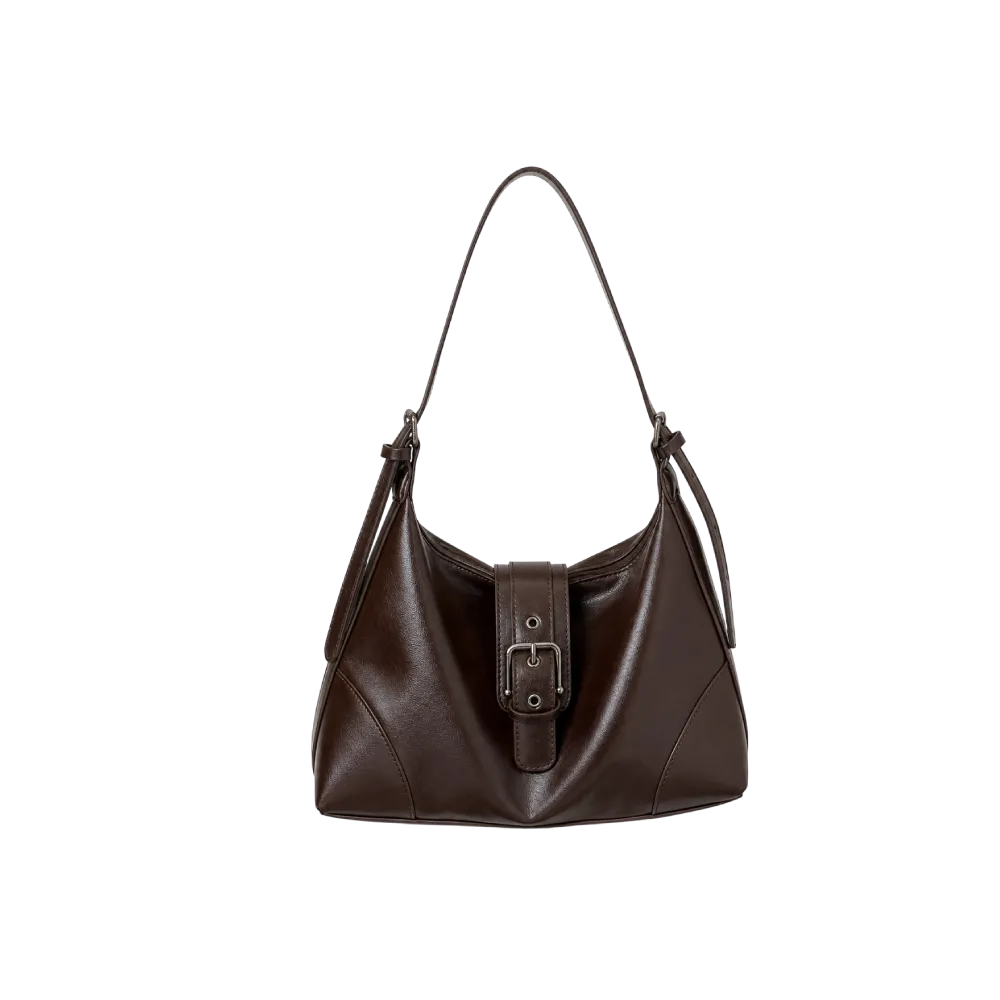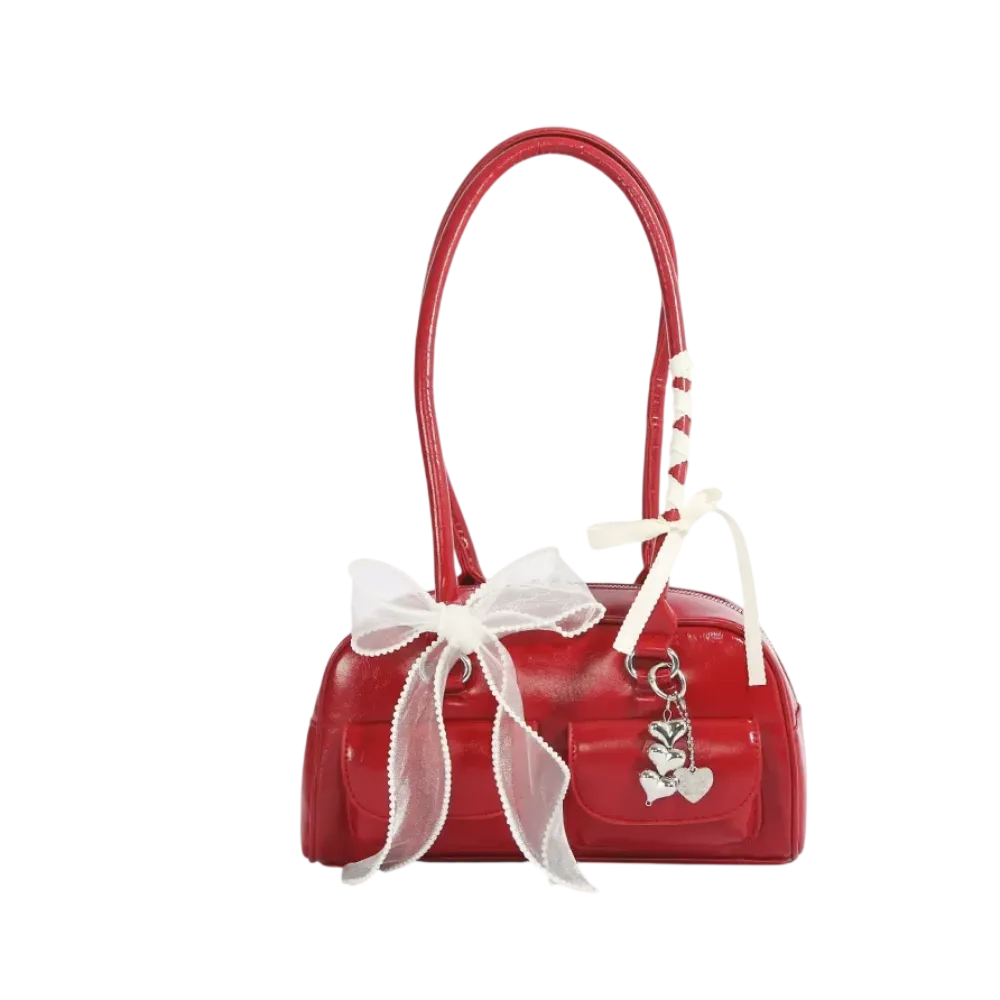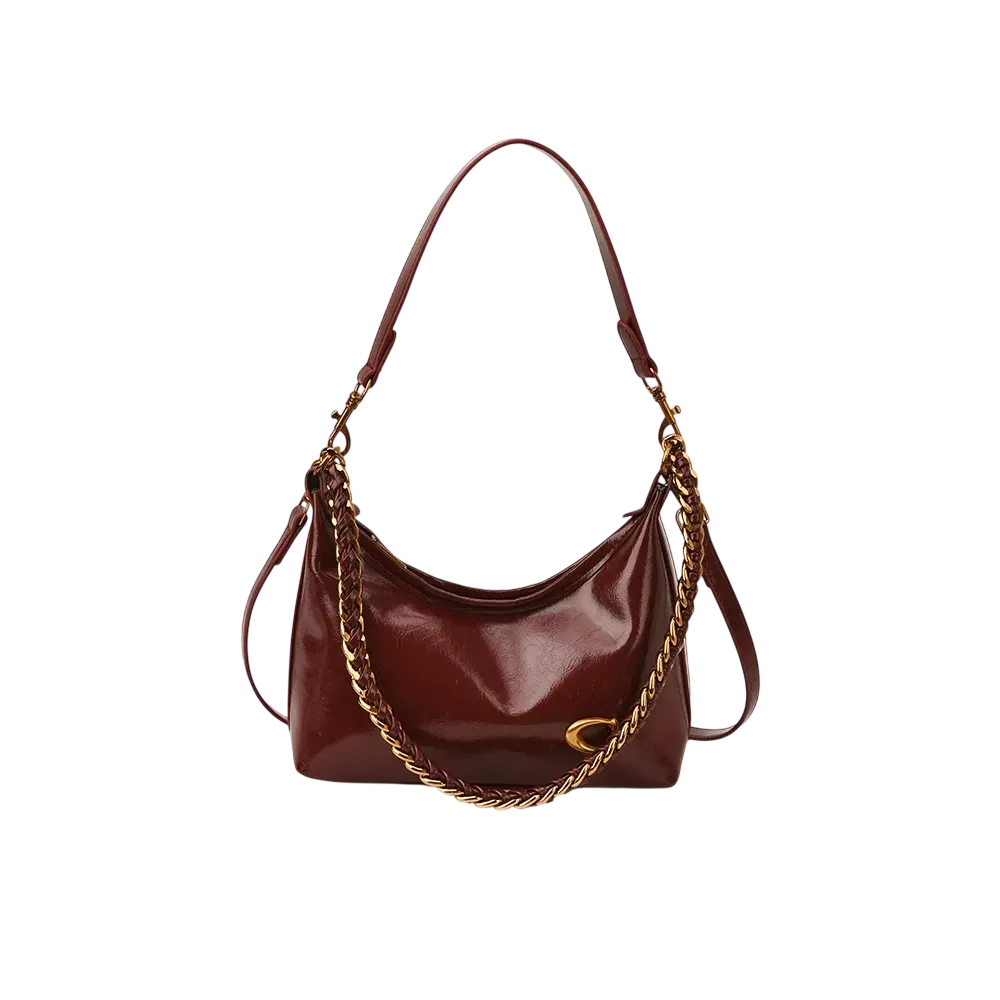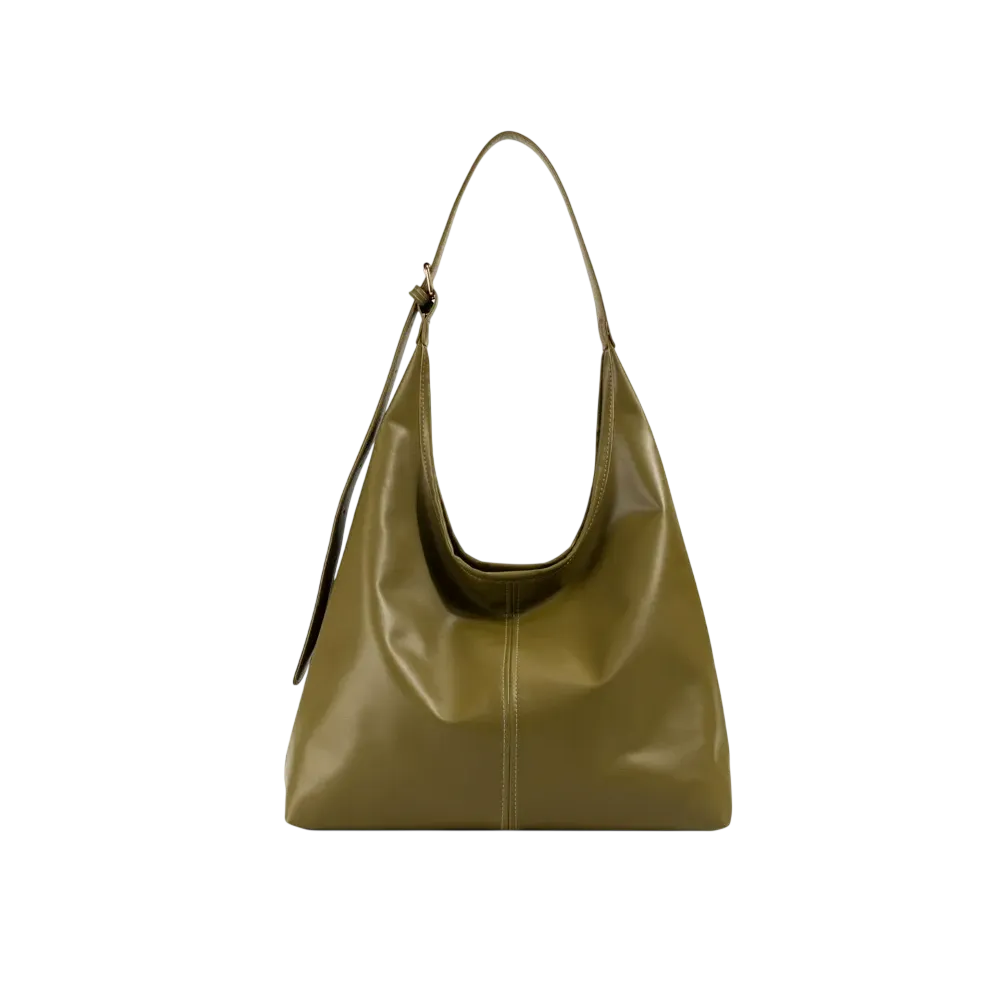
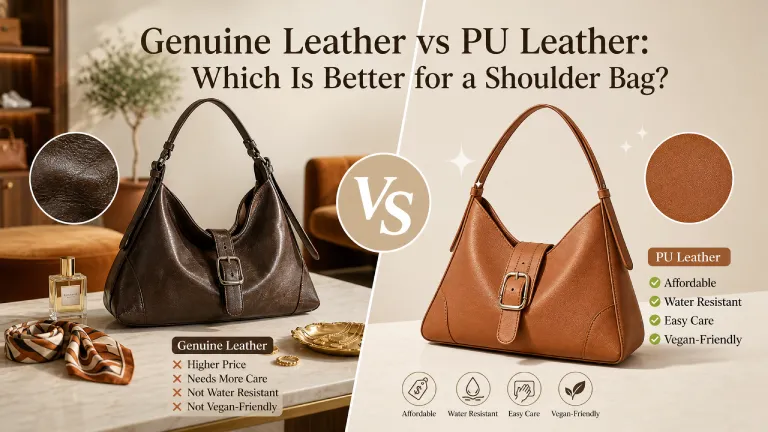
Few questions come up more often when shopping for a shoulder bag than this one: genuine leather or PU leather? Both have loyal fans, and both show up across price points and style categories. The honest answer is that neither is universally “better” — it depends on what you’re prioritizing: cost, maintenance, longevity, or ethical sourcing. Here’s a clear-eyed comparison to help you decide.
What Is PU Leather? What Is Genuine Leather?
PU leather (polyurethane leather) is a synthetic material made by coating a fabric base with a flexible polyurethane layer, engineered to mimic the look and texture of leather. It’s sometimes called “faux leather” or “vegan leather,” though not all faux leathers use the same construction — some use PVC instead of PU, which tends to be stiffer and less breathable.
Genuine leather is made from tanned animal hide. It’s a natural material, which means every piece has slightly different grain and texture, and it develops a unique patina over time with use. Within “genuine leather,” quality varies significantly too — full-grain and top-grain leather are more durable and age better than lower grades like genuine split leather, which is sometimes marketed with the same “genuine leather” label despite being a lower-quality cut.
Weight & Everyday Comfort
This is a difference people notice immediately but rarely factor into the buying decision. PU leather is typically lighter than genuine leather, since it’s built on a thinner fabric base rather than a full hide. For a bag you’re carrying on your shoulder for hours at a time, that weight difference adds up — a lighter PU leather bag often feels noticeably more comfortable over a full commuting day, even before you factor in whatever you’re carrying inside it.
Durability & Longevity Compared
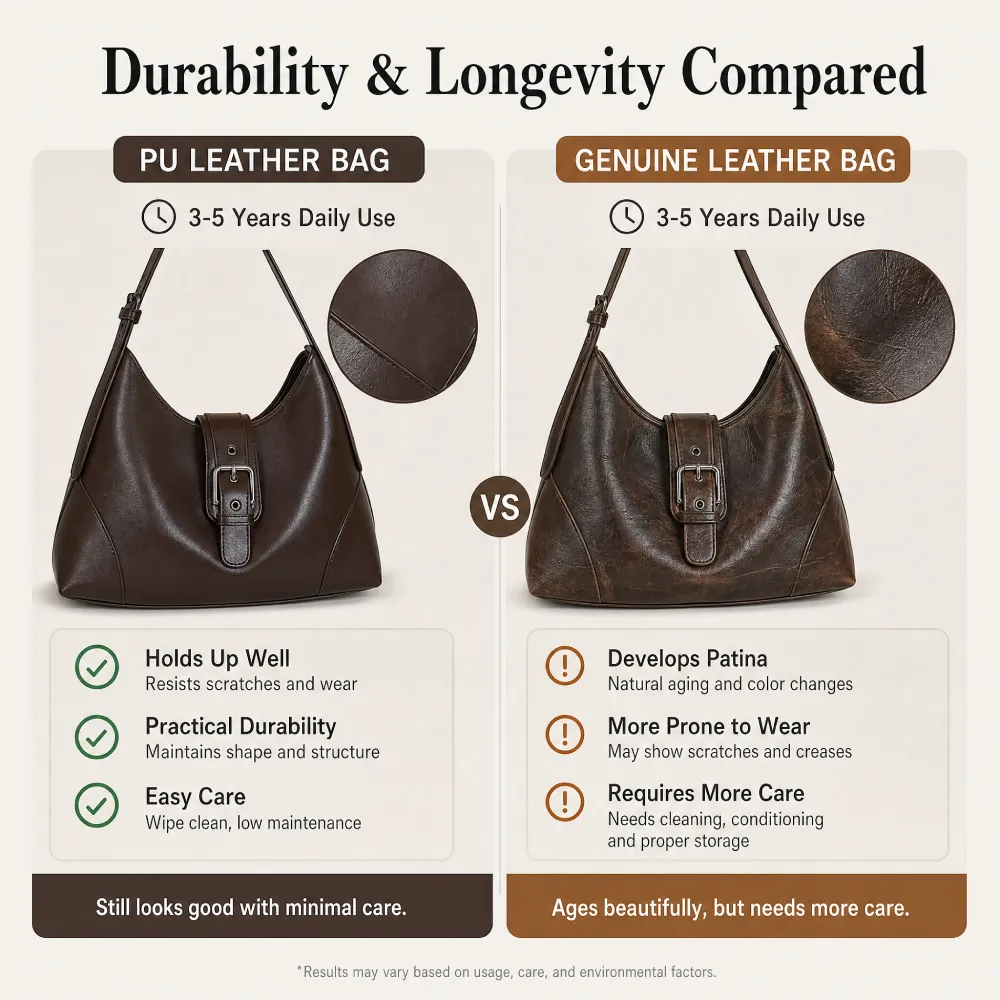
Genuine leather is generally more durable over the very long term — it can last decades with proper care, and develops character rather than looking worn. High-quality PU leather has improved significantly in recent years and holds up well for everyday use, typically lasting several years under normal conditions, though it’s more prone to cracking or peeling once the surface coating starts to break down, especially without proper care.
For a bag that sees daily use — tossed in and out of a car, set on various surfaces, exposed to weather — the practical durability gap between well-made PU leather and genuine leather is often smaller than people expect, especially within a bag’s realistic 3–5 year usage window before style or needs change anyway.
Common Myths About PU Leather
“PU leather always looks fake.” This was truer a decade ago than it is today. Manufacturing improvements in texture and finish mean higher-quality PU leather can closely replicate the look of genuine leather, particularly in structured styles where grain texture matters less than shape and color.
“PU leather cracks immediately.” Cracking is usually a sign of lower-quality PU leather or a coating that’s been exposed to excessive heat or sunlight, not an inherent flaw in the material itself. Well-made PU leather, properly cared for, holds up for years without cracking.
“Genuine leather is always the higher-quality choice.” Quality depends more on construction and grade than on the base material alone. A well-constructed PU leather bag with reinforced stitching and quality hardware will often outperform a poorly made genuine leather bag over time.
Cost Comparison
This is where the two materials diverge most clearly. Genuine leather requires more raw material processing and tends to command a higher price point across the market. PU leather offers a way to get a similar aesthetic — structured shapes, rich color options, a leather-like texture — at a more accessible price, which is a big part of why it’s become a go-to material for everyday, versatile bags.
Sustainability & Ethical Considerations
Sustainability comparisons between leather and PU leather are genuinely complex, and neither material is without trade-offs. Genuine leather is a byproduct of the meat industry but involves resource-intensive tanning processes, some of which use chemicals with environmental impact. PU leather avoids animal byproducts entirely, which appeals to consumers looking for vegan or cruelty-free options, though as a plastic-based material it has its own end-of-life considerations.
Industry sustainability reporting — including analyses from organizations tracking materials in the fashion sector — has noted a steady rise in demand for vegan and lower-impact leather alternatives, part of a broader shift toward more consciously sourced materials across the accessories market.
Maintenance: Which Is Easier to Care For?
PU leather generally wins here. It’s more water-resistant, doesn’t require conditioning, and can typically be wiped clean with a damp cloth. Genuine leather needs periodic conditioning to prevent drying and cracking, and is more sensitive to water and stains. If you’re looking for a full breakdown of care routines for both materials, our leather care guide covers cleaning, conditioning, and storage step by step.
Which One Should You Choose?
Best for Everyday Commuting
For a bag that needs to withstand daily handling with minimal upkeep, PU leather is often the more practical choice — it holds up well to routine wear and doesn’t demand regular conditioning.
Best for Investment Pieces
If you’re looking for a bag you plan to keep and use for many years, and don’t mind the maintenance routine, genuine leather offers a level of longevity and character that’s hard to replicate.
To see how PU leather compares to canvas and other materials used across different bag styles, our Shoulder Bag Materials Guide covers the full range of options and where each one makes the most sense.
FAQ
Is PU leather environmentally friendly?
It’s a mixed picture — PU leather avoids animal byproducts and the resource-intensive tanning process, but as a synthetic material it has its own environmental considerations at end of life. Neither material is a clear “best” choice on sustainability alone.
How long does PU leather typically last?
With reasonable care, quality PU leather generally holds up well for several years of regular use before showing significant wear.
Why are more brands using PU leather now?
It offers a leather-like look and feel at a more accessible price point, requires less maintenance, and appeals to consumers seeking vegan or cruelty-free materials.
How can I tell PU leather from genuine leather?
Genuine leather typically has irregular grain patterns and a distinct natural smell, while PU leather often has a more uniform texture and a slightly plasticky scent. Genuine leather also tends to feel warmer to the touch and develops creases naturally with use.