
Why Price and Value Are Not the Same Thing
When you are shopping for a handbag, the price tag is obvious. Whether the bag is actually worth that price is far less obvious. The most expensive bag in the store might be a poor investment, while a mid-range bag from an unknown brand might offer exceptional value. Learning to evaluate whether a handbag is worth the price protects your budget and ensures you make choices you feel genuinely good about long-term.
When you are shopping for a handbag, the price tag is the easiest thing to see. Whether the bag is actually worth that price is the hard part. The most expensive bag in the store can be a poor investment, while a mid-range bag from a lesser-known brand can offer exceptional value. Learning to evaluate whether a handbag is worth the price protects your budget and ensures you feel good about the purchase years later—not just on the day you buy it.
Price and value are not the same concept. A $600 bag can be overpriced if it is built from weak materials and rushed construction. A $100 bag can be a steal if it is crafted from quality leather with reinforced stitching. The real question is not “how much does it cost?” but “what am I actually getting for my money?”
Material Quality: What You Are Really Paying For
The first place to look is the material itself. Run your hand over the exterior. Does it feel substantial and durable, or thin and plasticky? Full-grain leather, top-grain leather, and high-grade PU each have different cost structures—and different lifespans. For a detailed breakdown of how materials affect both price and longevity, see our leather vs genuine leather guide.
Construction Checkpoints:
- Stitching: Even, tight stitches signal careful assembly. Loose or skipped stitches mean corners will blow out first.
- Hardware: Turn zippers and clasps over. Solid metal feels weighty; hollow, painted plastic feels light. Quality hardware is one of the most expensive components in a bag—brands that cut here are cutting everywhere.
- Lining: Thin, fragile linings tear within months. A quality lining (cotton twill, durable polyester, or bonded leather) protects your belongings and extends the bag’s usable life. If your lining is already failing, our lining replacement guide covers whether repair or full replacement makes more sense.
- Closures: Open and close every zipper and magnetic snap. Smooth glide = quality. Catching or misalignment = future frustration.
According to Textile Exchange material standards, quality handbags should demonstrate consistent construction throughout—not just on visible surfaces. A bag that cuts corners in hidden areas will fail exactly where you cannot see it coming.
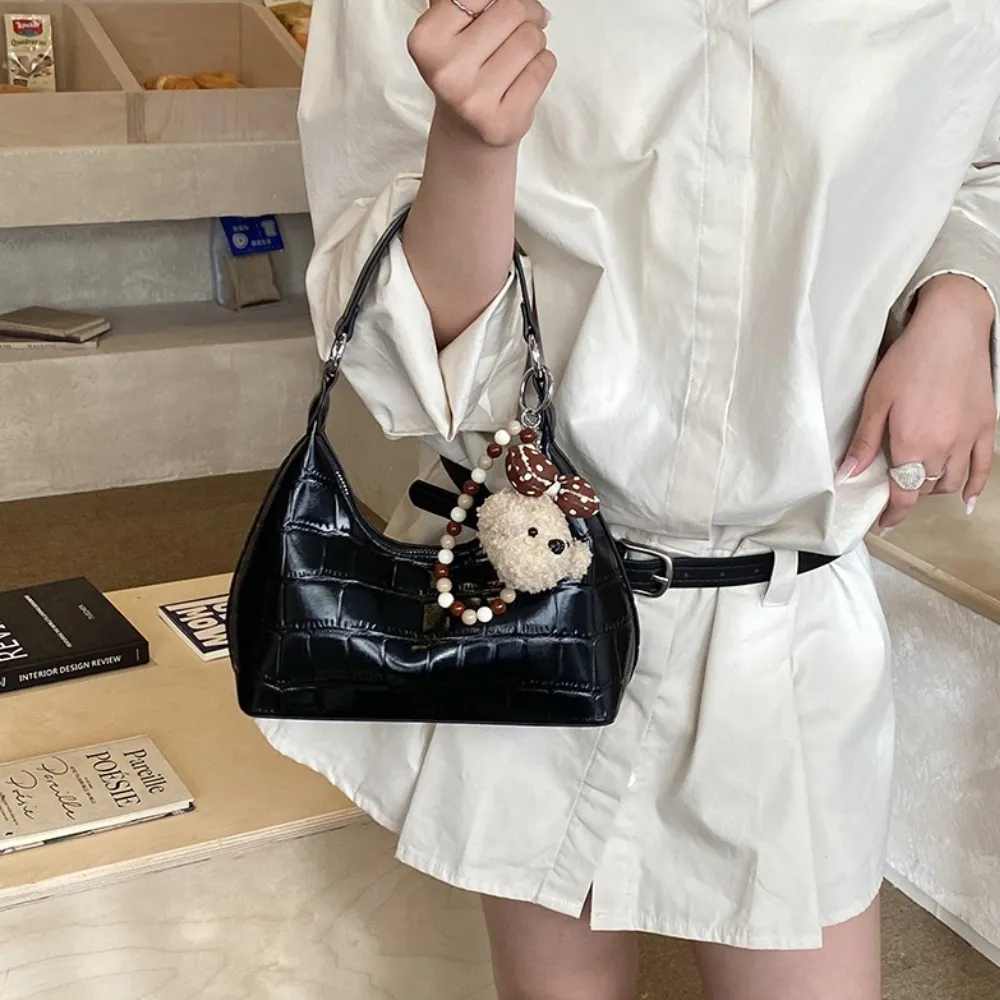
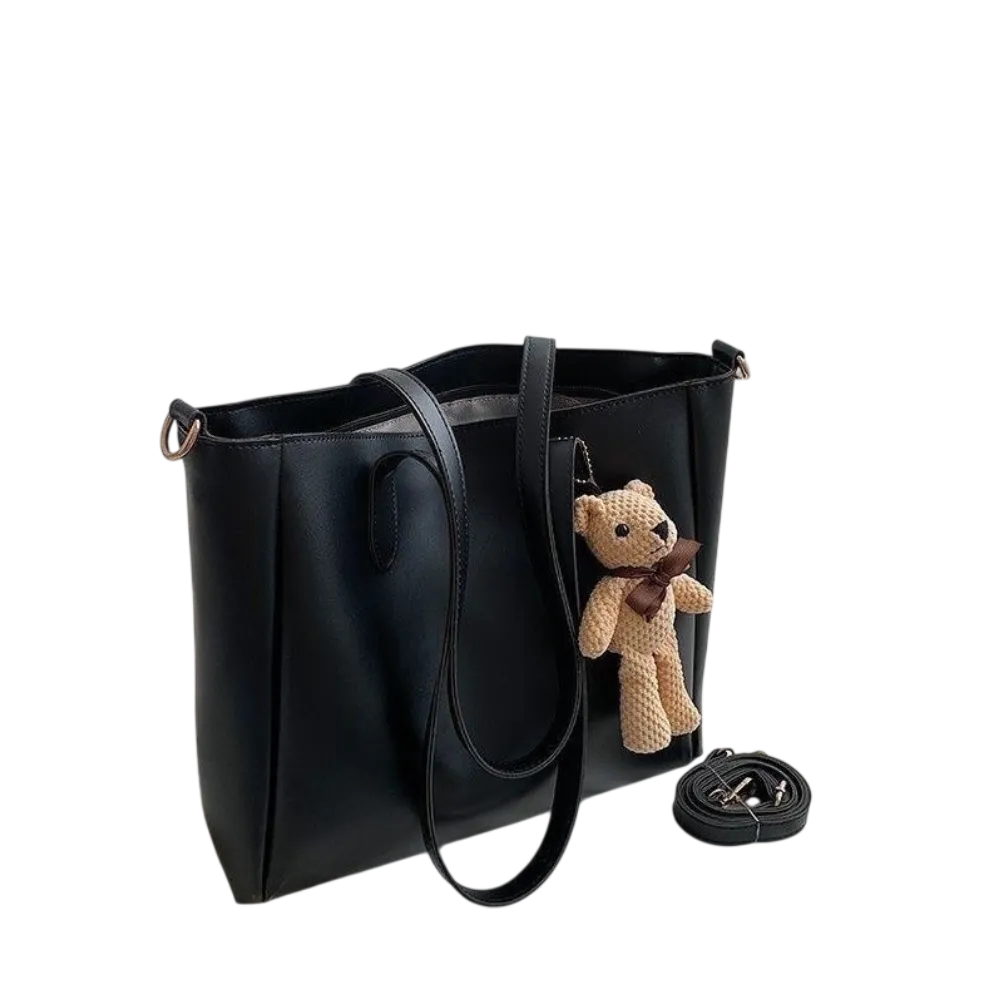
Crodar Vintage Handbag for Women
A vintage-inspired handbag for women featuring a textured crocodile pattern, comfortable top handle, spacious interior, and a charming teddy bear accessory.
$69.99
Weight, Proportion, and Design Integrity
A well-designed bag feels balanced, even before you load it. Hold it fully packed with your typical daily items. Does the strap distribute weight across your shoulder, or does it dig in after ten minutes? Cheap bags often feel unbalanced because designers skimp on strap reinforcement and internal structure. For guidance on choosing a bag that balances comfort and capacity, our crossbody bag size guide covers sizing principles that apply to everyday carry as well.
Proportion Matters:
Hardware should match the bag’s scale. Oversized buckles on a petite crossbody look clunky; undersized clasps on a large tote look cheap. Pockets should be placed where your hand naturally reaches them—not tucked into awkward corners as an afterthought. A bag worth the price shows that a designer invested time considering how it will actually be used, not just how it looks on a shelf.
Empty Weight:
A handbag should not be heavy when empty. If a bag feels like a brick before you put a single item in it, the materials or construction are unnecessarily bulky. A quality bag achieves durability through smart engineering, not excess mass.
Resale Value: The Hidden Half of the Equation
One of the most overlooked factors in handbag value is resale. A well-chosen designer bag from an established brand often retains 40–60% of its original retail price after years of use. A budget bag has essentially zero resale value—if you pay $50, you will recover nothing when you are done with it.
The Math:
If you pay $400 for a designer bag and sell it three years later for $200, your true cost is $200 spread across years of use. If you pay $50 for a budget bag and cannot resell it, your cost is $50 for perhaps 6–12 months of use. On a per-year basis, the “expensive” bag is often cheaper.
Before buying, check resale platforms to see what similar bags actually sell for—not what sellers list them for, but what they close at. This tells you what the market genuinely thinks the bag is worth, independent of retail markup. For a realistic look at which silhouettes hold value over time, The RealReal’s resale data is one of the most transparent windows into what the secondary market actually pays for pre-owned handbags.
Brand Markup vs. Actual Quality
Not all price increases are justified by quality improvements. Some brands charge premium prices primarily for prestige, marketing campaigns, and retail real estate. Other brands offer comparable quality at lower prices because they operate with less overhead and spend less on advertising.
How to Research:
- Look up the specific model, not just the brand name. A luxury brand’s entry-level bag might be constructed no better than a mid-range brand’s flagship piece.
- Read long-term reviews—what people report after 6 months, 1 year, and 2 years of use is far more valuable than first-impression unboxings.
- Check if the brand is transparent about its materials and manufacturing. Transparency usually correlates with quality confidence.
For editorial context on which bags are actually worth the investment versus which are pure marketing plays, PureWow’s handbag investment guide breaks down which styles deliver long-term value and which are better skipped.
Functionality: Does It Actually Work for Your Life?
A bag is only worth the price if it fits your real routine. An expensive evening clutch that never leaves your closet is not worth the price, no matter how beautiful. A practical work tote you use five days a week for four years is worth every dollar—even at a higher upfront cost. For help matching bag styles to different life stages and routines, see our handbags by life stage guide.
Before evaluating price, ask yourself:
- How many days per week will I carry this?
- How many years do I realistically expect it to last?
- What items will I put in it every single day?
- Does it solve a problem my current bags do not?
A bag worth the price for a daily commuter carrying a laptop and a water bottle might be completely wrong for someone who rotates through twenty bags and rarely uses the same one twice. Context determines value.
The Wholesale Framework: Understanding Markup
Handbags typically wholesale at 40–50% of retail. This means a $100 retail bag costs the retailer roughly $50. A $600 retail bag costs roughly $300 wholesale. That spread tells you something important: the difference between a $100 bag and a $600 bag is not automatically $500 worth of better materials. It might be $100 of better materials and $400 of brand positioning.
You will rarely know the actual wholesale cost as a consumer, but this framework helps you think critically. If a $600 bag’s manufacturing cost is only $80, you are paying mostly for branding. If it is $250, significantly more of your money is going to actual quality. Use visible cues—stitching, hardware, lining, leather grade—to estimate where a bag falls on that spectrum.

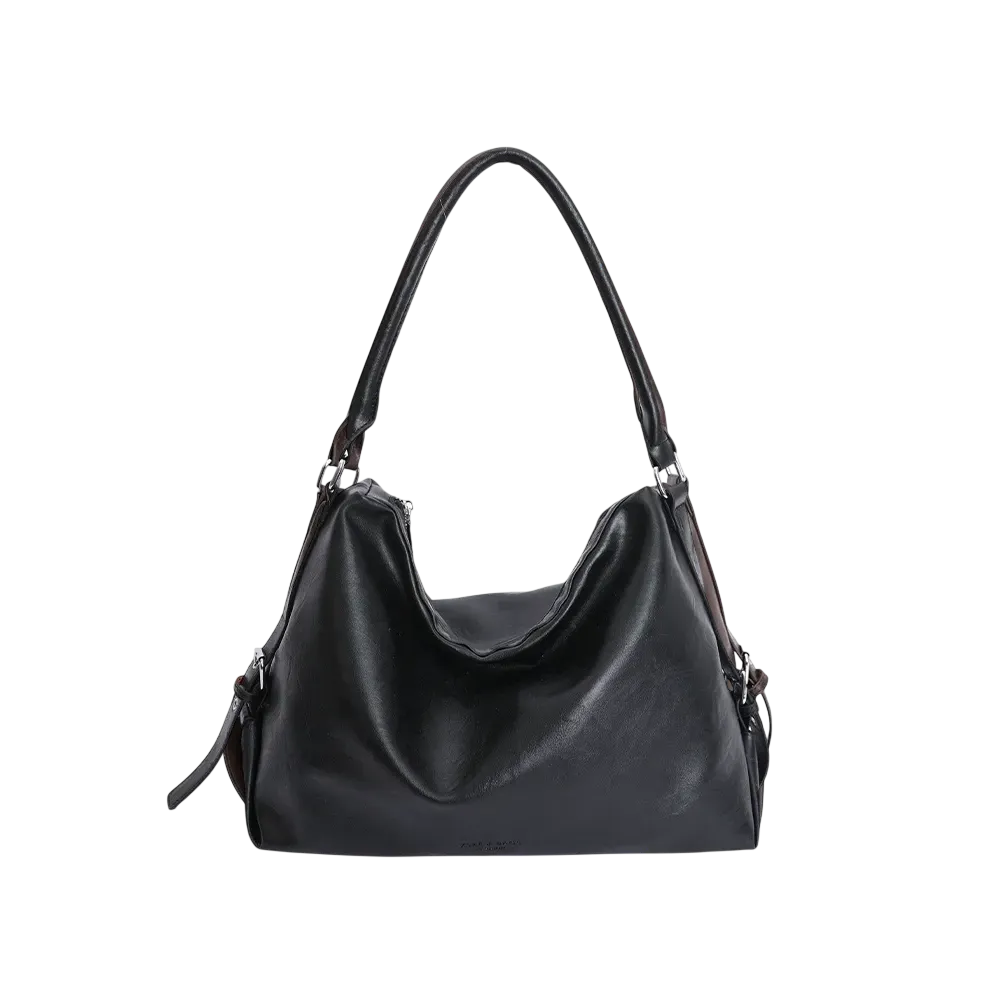
Crodar Pearl Handle Handbag
Elegant Crodar handbag for women featuring a stylish pearl handle and adjustable shoulder strap. Available in silver, mauve, apricot, black, cream, and pink.
When to Invest in a More Expensive Bag
Expensive handbags make financial sense in specific scenarios:
- High frequency of use: If you will carry the bag 5+ days a week, durability matters. A $400 bag lasting 8 years beats a $100 bag lasting 1 year.
- Specific requirements: If you need a particular size, material, or feature set that budget bags simply do not offer, paying more is justified because alternatives do not exist.
- Proven track record: You have tested the brand or style before and know it holds up. Buying from a brand whose bags you have personally worn for years reduces risk.
- Emotional connection: Sometimes a bag sparks genuine joy and confidence. If that matters to you, and the purchase will not create financial strain, that is a valid part of the value equation.
When you should not invest in an expensive bag:
- You are buying it purely for the logo and cannot articulate what makes the construction better.
- You are in a life stage where your needs change every six months (new job, new city, new routine).
- You have never owned a bag from that brand and cannot verify quality through personal experience.
When a Budget Bag Is the Smarter Choice
Budget bags are not automatically bad value. They make sense when:
- You are testing a new silhouette or carrying style before committing to an expensive version.
- Your lifestyle is in flux and your bag needs will likely change soon.
- You want a trendy color or shape that you do not expect to carry beyond one season.
- You need a secondary bag for specific scenarios (gym, beach, travel backup) where wear and tear is expected.
The key is honesty about intent. If you know you will carry a bag daily for years, invest. If you know it is a short-term experiment, save your money.
Putting It All Together: The Worth-It Checklist
Before you buy, run through this quick evaluation:
| Check | Worth It | Think Twice |
|---|---|---|
| Stitching & seams | Tight, even, reinforced at stress points | Loose, skipped, or unraveling |
| Hardware | Solid metal, smooth operation | Hollow, painted plastic, catches |
| Lining | Durable fabric, cleanly finished | Thin, glued rather than stitched |
| Resale potential | Established brand, classic silhouette | No secondary market presence |
| Price vs. visible quality | Materials justify the cost | Price is mostly brand markup |
For additional editorial perspective on building a handbag wardrobe that balances investment pieces with practical everyday options, Who What Wear’s investment bag guide offers a curated lens on which styles are worth prioritizing. And for a broader view on how fashion consumption intersects with sustainability, the Ellen MacArthur Foundation’s circular fashion framework makes the case for buying fewer, better, longer-lasting pieces over cycling through disposable trends.
FAQ
Q: How do I know if a handbag is worth the price?
A: Evaluate materials, construction, resale value, and whether the bag actually fits your daily needs. A bag worth the price combines durability, thoughtful design, and alignment with how you live. Price alone tells you almost nothing without these context layers.
Q: Are expensive handbags always better quality?
A: No. Some expensive bags charge primarily for brand prestige. Always check stitching, hardware, lining, and long-term reviews rather than assuming price equals quality.
Q: Is resale value a good indicator of a bag’s worth?
A: Yes. Resale value reflects what the market actually believes the bag is worth after years of use. Bags that hold 40–60% of retail value are generally well-constructed and desirable.
Q: When should I buy a budget bag instead of an investment bag?
A: Buy budget when you are testing a new style, your lifestyle is changing, or you need a secondary bag for specific short-term use. Save the investment for the bags you carry daily.
Q: Can a mid-range bag be better than a luxury bag?
A: Absolutely. Some mid-range brands focus on quality construction and materials without the luxury markup. Research the specific model rather than the brand tier.
Q: How much should I expect to spend on a handbag that lasts 5+ years?
A: Quality leather bags in the $200–$500 range often deliver 5–10 years of regular use. Designer bags above $800 can last 10–20 years and often retain resale value. Budget bags under $100 typically last 6–18 months.