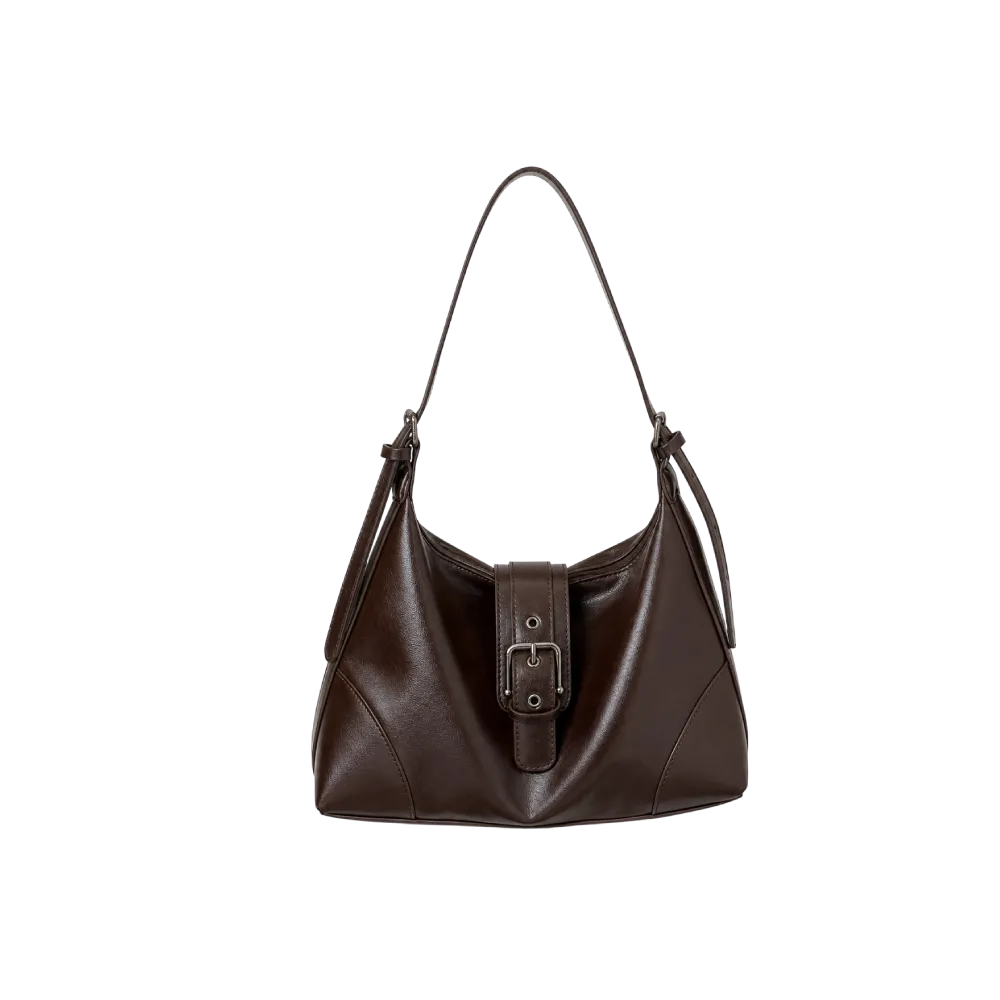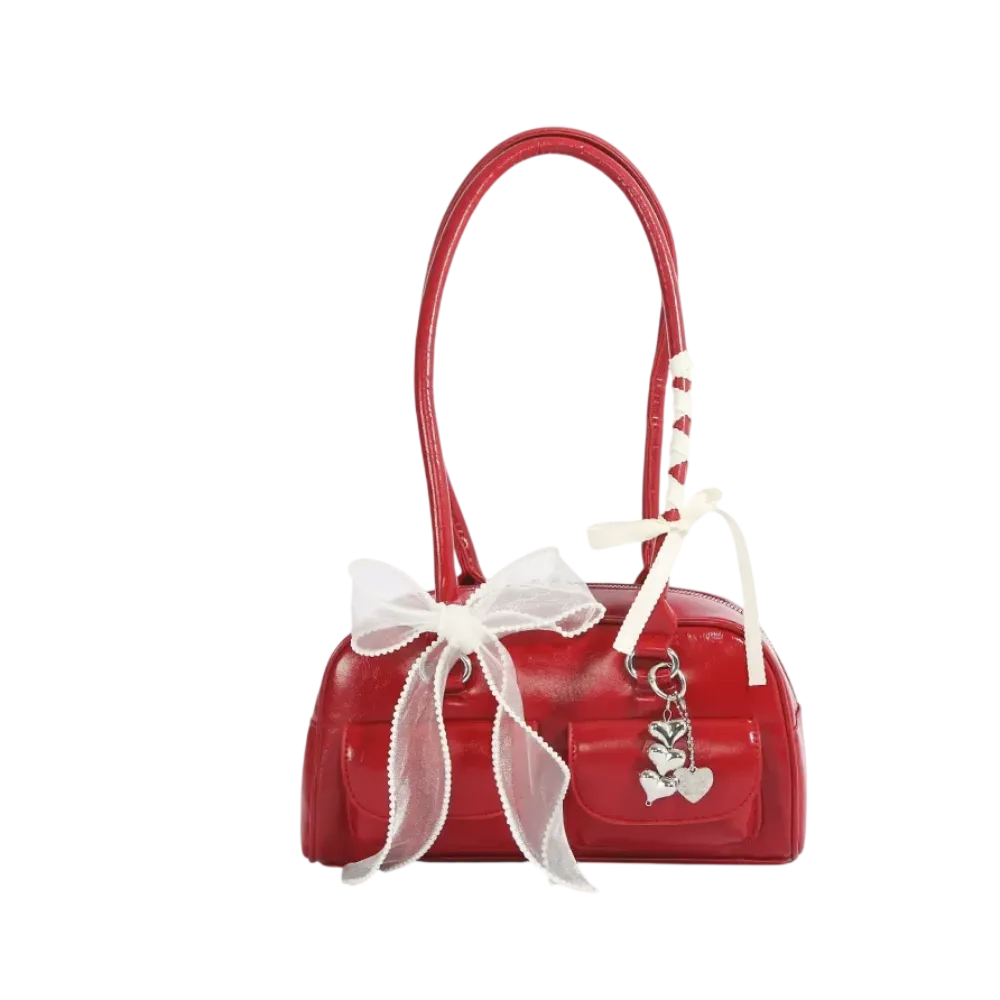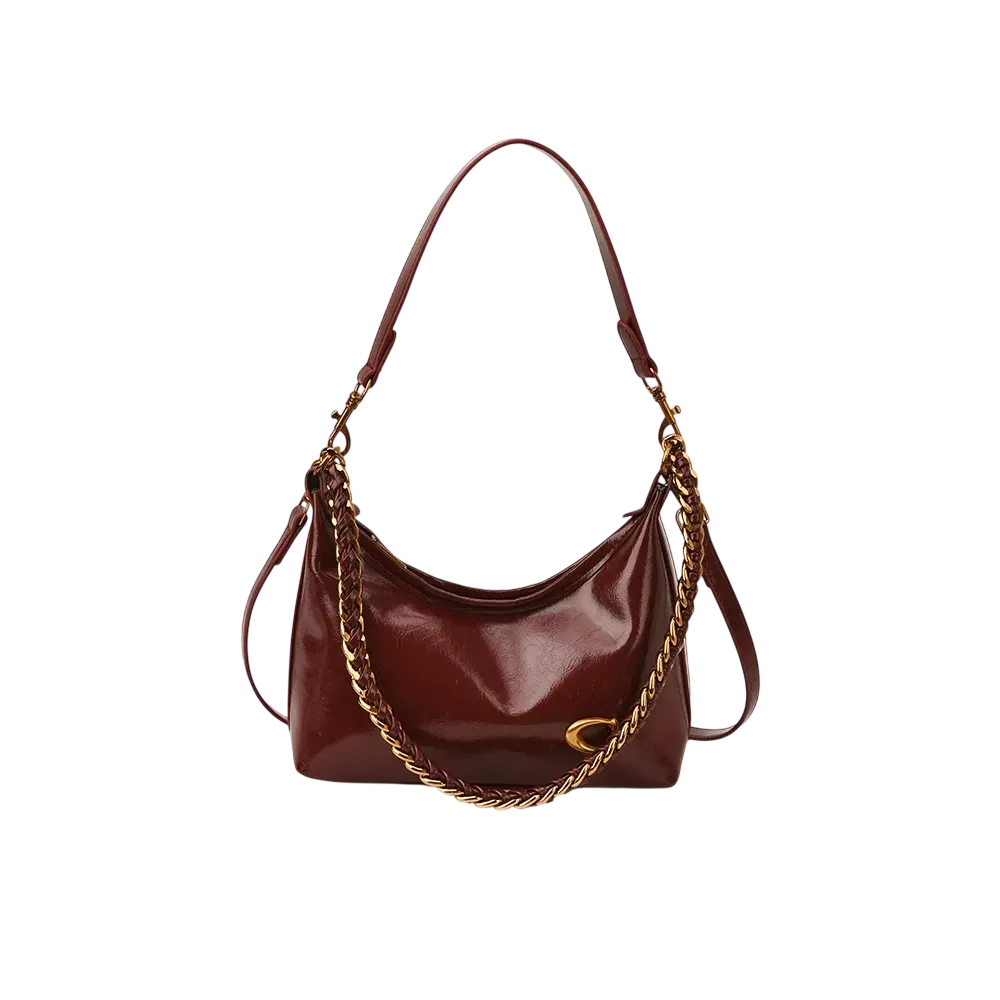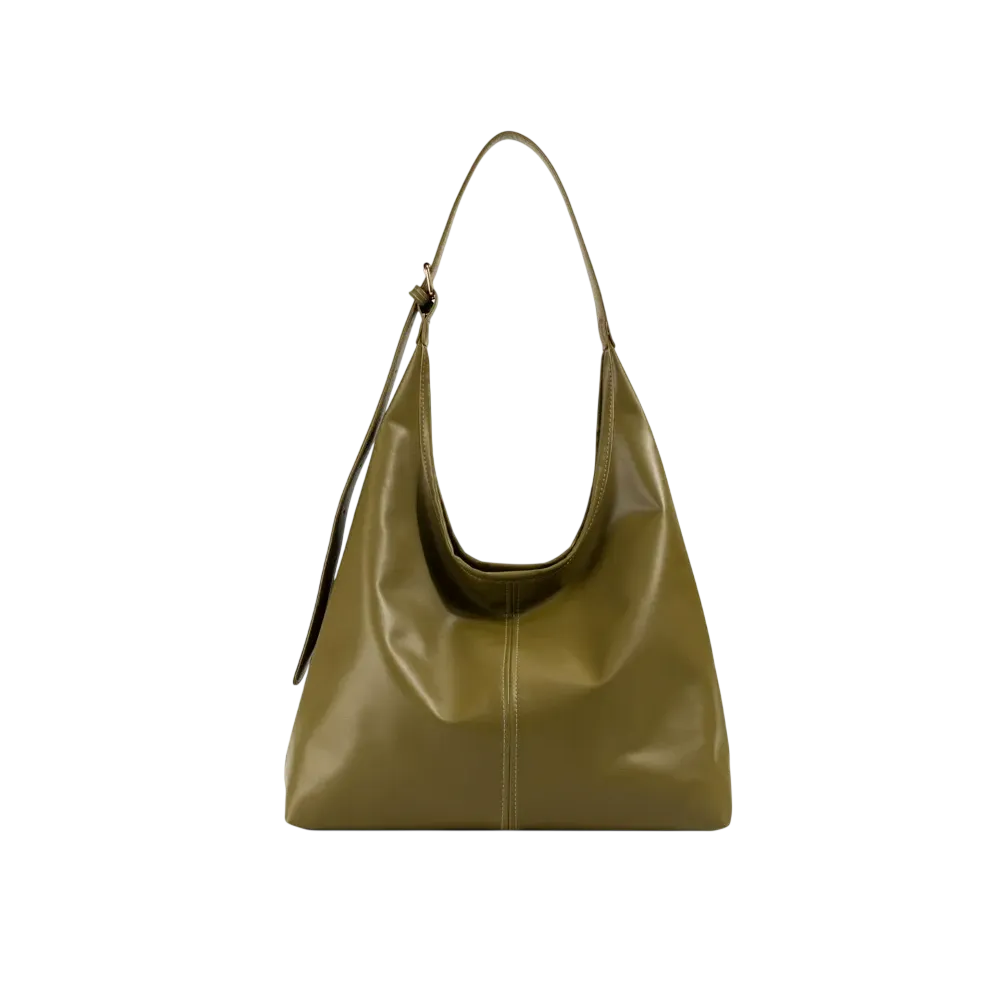
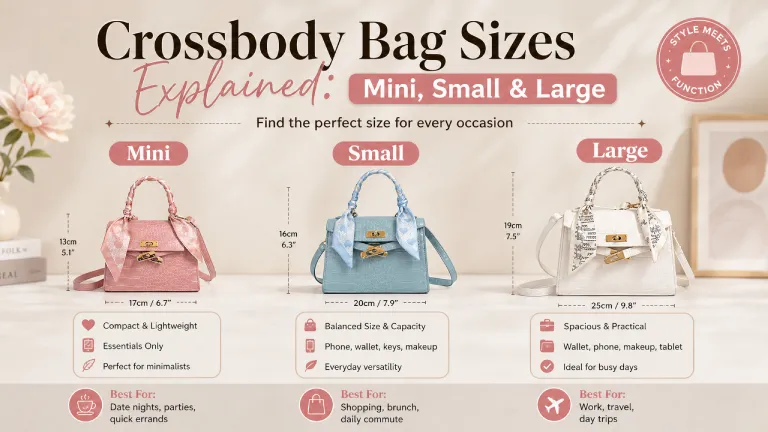
Unlike totes or shoulder bags, where “bigger is often just more convenient,” crossbody bag size actually changes how the bag performs day to day — it affects comfort, how it sits against your body, and what you can realistically carry. Here’s a practical breakdown of what “mini,” “small,” and “large” actually mean, and how to figure out what you need.
Why Size Matters More for Crossbody Bags Than Other Styles
Because a crossbody bag rests directly against your body rather than hanging from a shoulder or being carried by hand, its size and shape directly affect comfort and mobility. A bag that’s too large can feel bulky and restrict movement, especially when worn under a jacket, while one that’s too small might not hold what you actually need for the day. Getting the size right matters more here than with almost any other bag style.
There’s also a body-proportion factor that’s easy to overlook: a large crossbody bag on a petite frame can look and feel oversized regardless of what’s actually inside it, while a mini bag on a taller frame can look disproportionately small. Size shouldn’t be chosen on capacity needs alone — how it sits visually against your frame matters too.
A Quick Size Comparison
| Mini | Small | Large | |
|---|---|---|---|
| Typical width | 6–7 inches | 8–9 inches | 10+ inches |
| Holds | Phone, cards, keys | Phone, wallet, sunglasses | Tablet, water bottle, documents |
| Best for | Nights out, festivals | Everyday errands, casual wear | Travel, work, all-day carry |
| Comfort over a full day | High (very light) | High | Moderate (depends on load) |
Mini Crossbody Bags: Dimensions & Best Uses
Mini crossbody bags typically measure somewhere around 6–7 inches wide and 4–5 inches tall — just enough for a phone, a few cards, lip balm, and keys. They’re a popular choice for:
- Nights out and events where you don’t want to carry much
- Layering under a coat without adding bulk
- Festival or concert settings where a compact profile is often required (see our guide on Clear Crossbody Bags if you’re heading somewhere with a clear bag policy)
The tradeoff is obvious: minis prioritize style and mobility over capacity, so they’re rarely a good fit as an everyday, all-purpose bag.
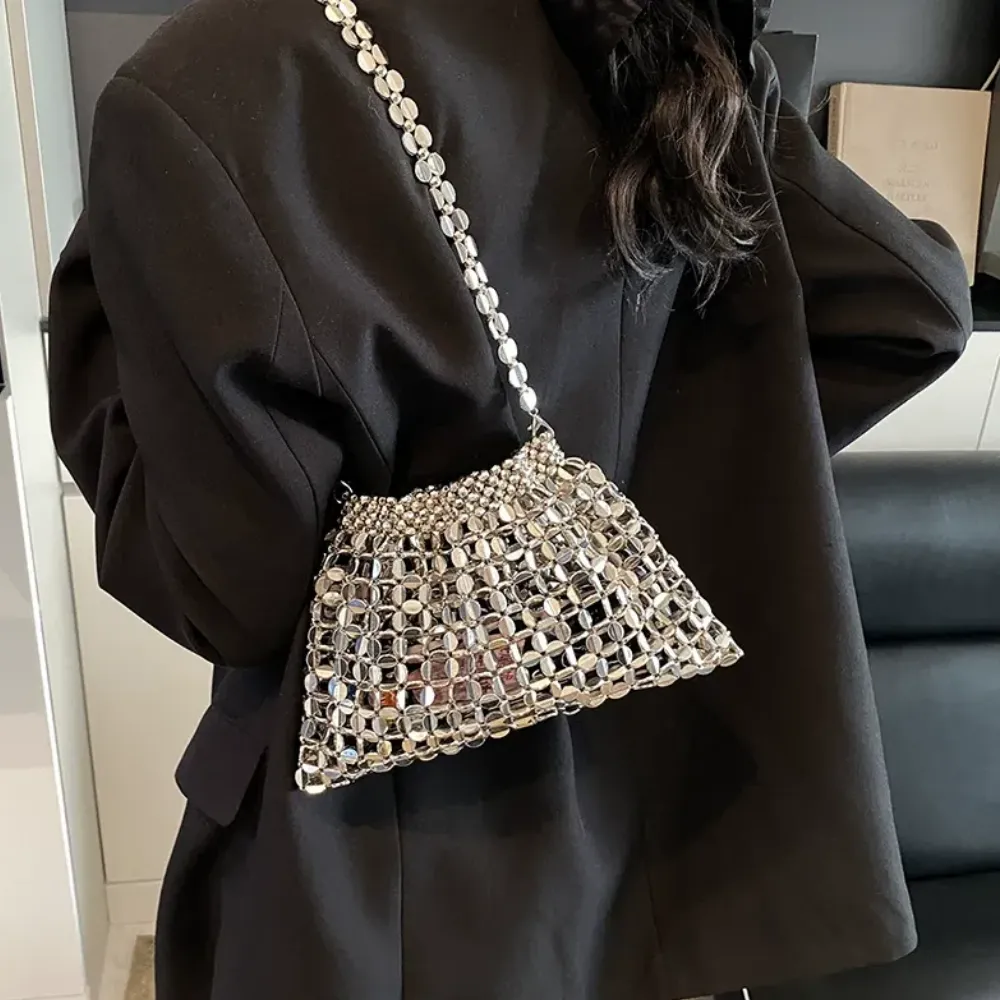
Crodar Silver Acrylic Crossbody Bag
The Crodar Silver Acrylic Crossbody Bag combines shimmering acrylic embellishments with an elegant chain strap for a glamorous yet versatile look.
Small Crossbody Bags: Dimensions & Best Uses
Small crossbody bags generally fall in the 8–9 inch width range, offering enough room for a phone, wallet, sunglasses case, and a few smaller items, without much extra space. This size tends to be the most versatile of the three — small enough to stay comfortable across a full day, large enough to function as a genuine everyday bag for people who don’t need to carry a laptop or tablet.
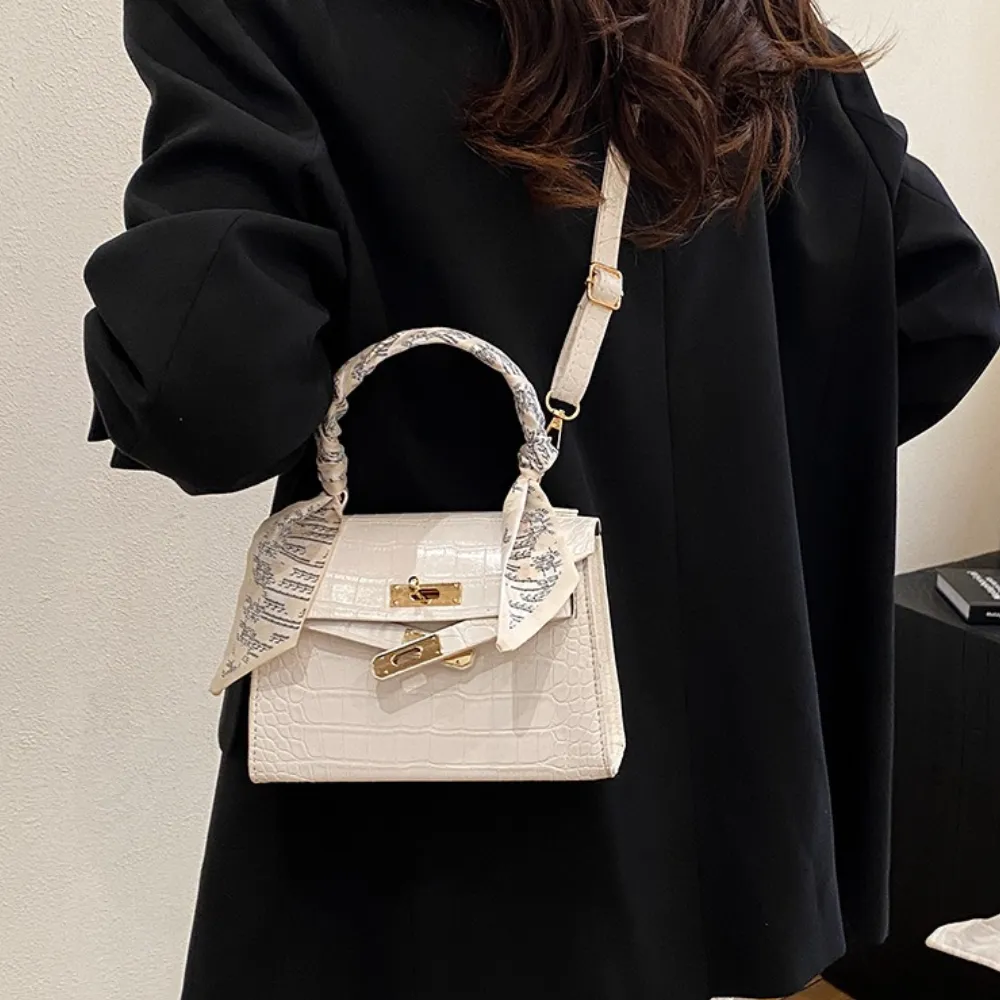
Crodar PU Leather Crossbody Bags
Crodar PU Leather Crossbody Bags combine versatile style and everyday functionality, available in green, black, coffee brown, and more for effortless women’s fashion.
Large Crossbody Bags: Dimensions & Best Uses
Large crossbody bags — generally 10 inches or wider — are built for people who want the security and hands-free comfort of a crossbody style without sacrificing much capacity. These bags can typically hold a small tablet, a slim wallet, a water bottle, and daily essentials, making them a practical choice for travel days, working parents, or anyone who simply prefers one bag that does it all rather than switching between a mini bag and a larger tote. If you’re specifically looking for a spacious option in this category, our PU Leather Crossbody Bags: A Complete Buyer’s Guide covers what to look for in larger PU leather styles that hold their shape well even at bigger sizes.
How Body Type Affects the Right Size for You
Beyond what you need to carry, your frame plays a role in which size actually looks and feels balanced.
- Petite frames generally look most proportional with mini or small bags, worn with a slightly shorter strap so the bag doesn’t overwhelm the torso.
- Average to taller frames have more flexibility across all three sizes, though a large bag on a much shorter strap can still look disproportionate.
- Broader shoulders or a fuller bust often pair well with slightly larger, more structured bags, since a very small or slim bag can visually get lost.
As with most styling guidance, these are starting points rather than strict rules — comfort and how a bag feels in daily use should ultimately outweigh proportion guidelines. Body-proportion styling advice from Who What Wear makes a similar point about accessories generally: fit and personal comfort tend to age better than chasing a strict visual formula.
Does Size Affect Price?
Generally, yes, though the relationship isn’t perfectly linear. Larger bags use more material and typically more hardware and structural reinforcement, which tends to push price up somewhat. That said, construction quality and material — genuine leather vs. PU leather, for example — usually affects price more than size alone. A well-made small PU leather crossbody can easily cost more than a poorly constructed large one, so it’s worth evaluating quality and size as separate factors rather than assuming bigger always means pricier.
How to Measure What You Actually Need
Rather than choosing a size based on looks alone, it helps to lay out what you’d actually carry on a typical day — phone, wallet, keys, and whatever else is non-negotiable — and measure that against the bag’s interior dimensions before buying. A few quick reference points:
- Just phone, cards, and keys → mini is usually enough
- Phone, wallet, sunglasses, and a few small extras → small is the sweet spot
- Tablet, water bottle, or travel documents → go large
It’s also worth accounting for a little buffer room rather than measuring to the exact millimeter — bags that are packed completely full lose some shape and become harder to close comfortably, so leaving a small margin tends to work better in practice than sizing to the absolute minimum.

FAQ
What size is considered a “mini” crossbody bag? Mini crossbody bags are typically around 6–7 inches wide, sized to hold just the basics — phone, a few cards, and small items like lip balm or keys.
Can a small crossbody bag fit a phone and wallet? Yes — small crossbody bags (roughly 8–9 inches wide) are generally sized to comfortably hold a phone, wallet, and a few smaller essentials without feeling overstuffed.
What’s the best crossbody bag size for travel? A large crossbody bag, generally 10 inches or wider, tends to work best for travel since it can hold documents, a phone, and other essentials while still offering the security and hands-free comfort of a crossbody style.
Does a bigger crossbody bag cost more? Not always — while larger bags do tend to use more material, construction quality and material choice (like genuine leather vs. PU leather) usually have a bigger impact on price than size alone.
What size crossbody bag suits a petite frame best? Mini or small crossbody bags generally look most proportional on petite frames, especially when paired with a slightly shorter strap so the bag sits closer to the natural waist rather than the hip.