Why Bag Organization Affects More Than Just Convenience
When you organize a handbag, you are not just making it tidier. You are changing how fast you can find your keys, whether a pen leaks onto your wallet, and how often you need to empty the entire contents onto a table. Good organization reduces the mental load of using a bag daily and can actually extend the life of the bag itself by protecting contents from unnecessary friction and spills.
A disorganized bag also encourages overpacking. When items have no home, you keep adding things without noticing duplicates or things you have not used in weeks. That is why organization is closely tied to managing the total load you carry—and load management directly affects comfort and strap longevity.
Pouches vs. Built-In Dividers vs. Bag Organizer Inserts
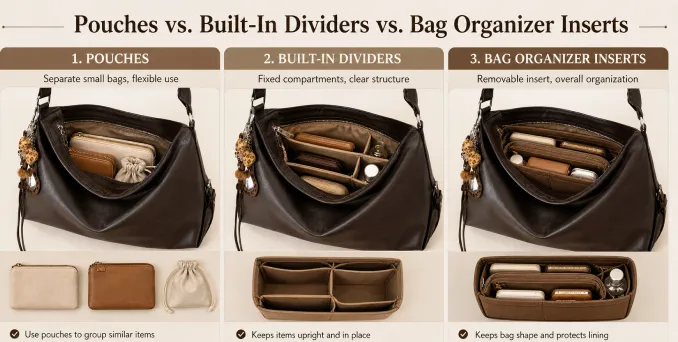
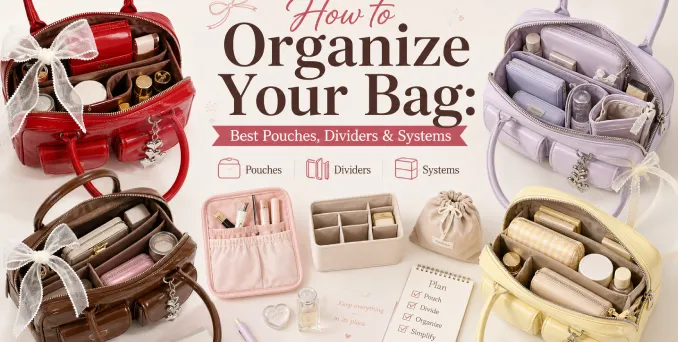
Before choosing an organization system, understand the three main categories:
Pouches
Removable pouches let you group similar items and move them between bags. A tech pouch can hold cables and chargers; a cosmetics pouch can contain loose personal-care items. They work best when you own multiple bags and want to transfer one coordinated group rather than rebuilding the entire bag interior.
Pouches are also the most flexible option. You can use as many or as few as needed, arrange them however fits your bag, and replace one pouch without touching the rest. The downside is that pouches take up space themselves and can add bulk.
Built-In Dividers
Some bags are designed with interior pockets, slots, or compartments that create natural zones. These are permanent parts of the bag structure. If the design matches your routine, built-in dividers work seamlessly. If the layout does not match how you use the bag, they can become frustrating because they cannot be moved.
Bag Organizer Inserts
A bag organizer insert is a fabric grid or structured frame that sits inside the main compartment. It creates multiple small pockets from a single open space, converting an unstructured bag into a compartmentalized one.
According to The Container Store’s bag organization guide, organizer inserts work best for:
- Bags with one large, open main compartment
- People who regularly switch between multiple handbags
- Anyone with many small loose items that disappear
The downside: inserts add bulk and can make the bag harder to pack flexibly. If your routine changes or you acquire different items, a fixed insert may become limiting.
A Simple Zone System: Tech, Personal Care, Daily Essentials
The most reliable organization method divides the bag into three functional zones:
Zone 1: Daily Essentials (Quick Access)
These are items you need constantly and should be easiest to reach:
- Phone
- Keys
- Wallet or payment cards
- Transit card (if commuting)
Place these in the smallest, most accessible pocket or pouch. This is often the top front pocket or a quick-access exterior pocket. The goal is to grab them in seconds without removing the bag.
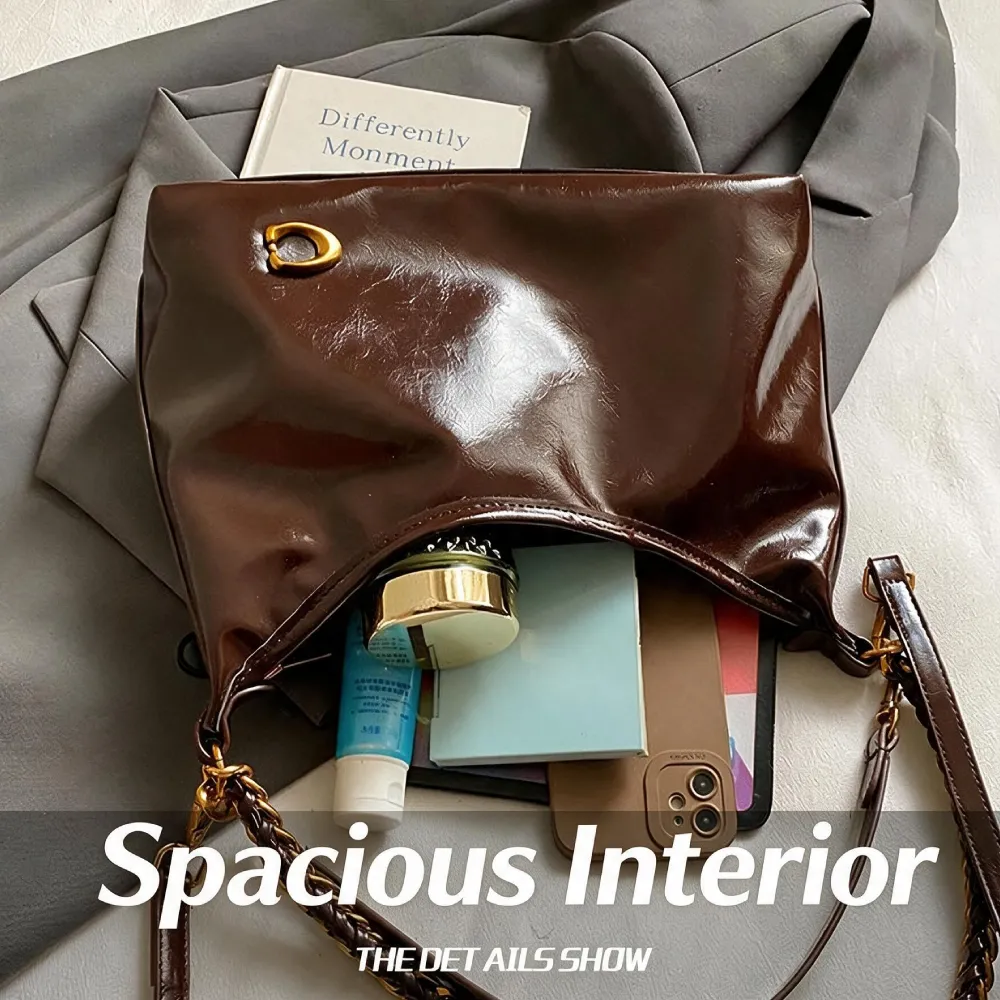
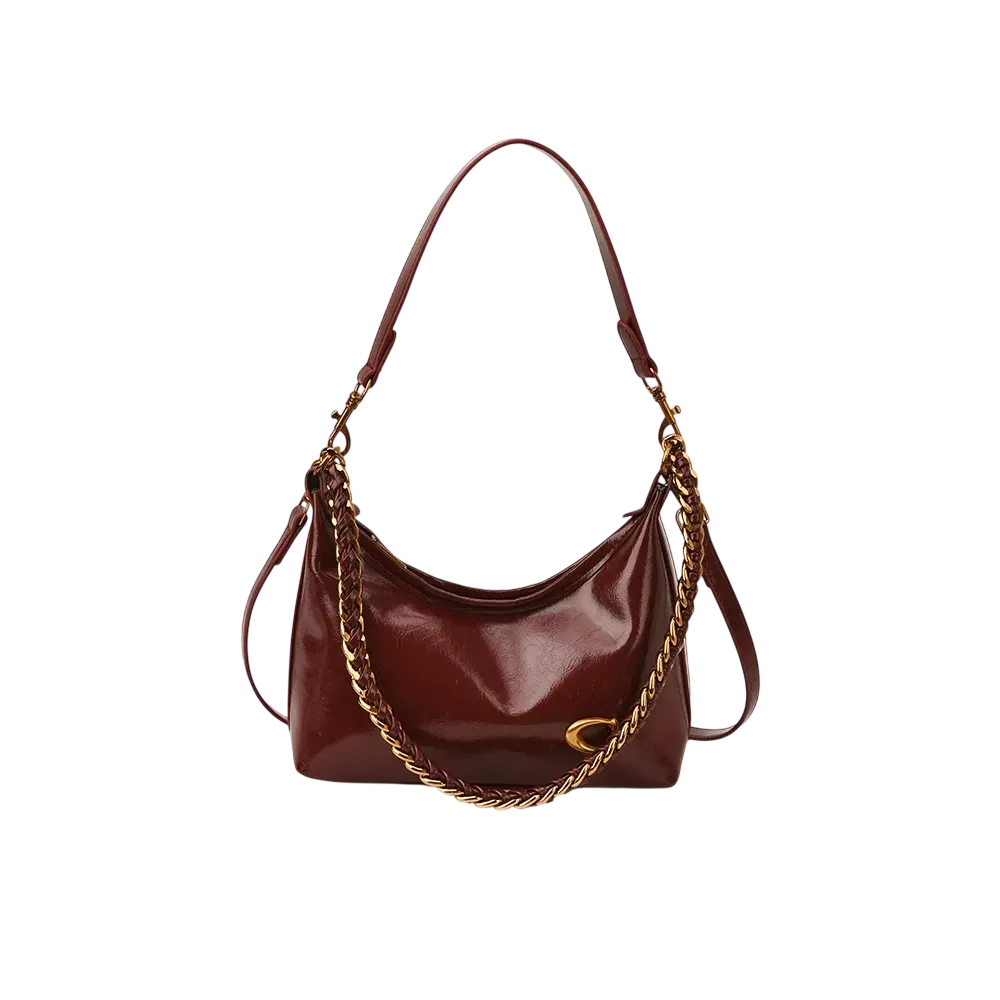
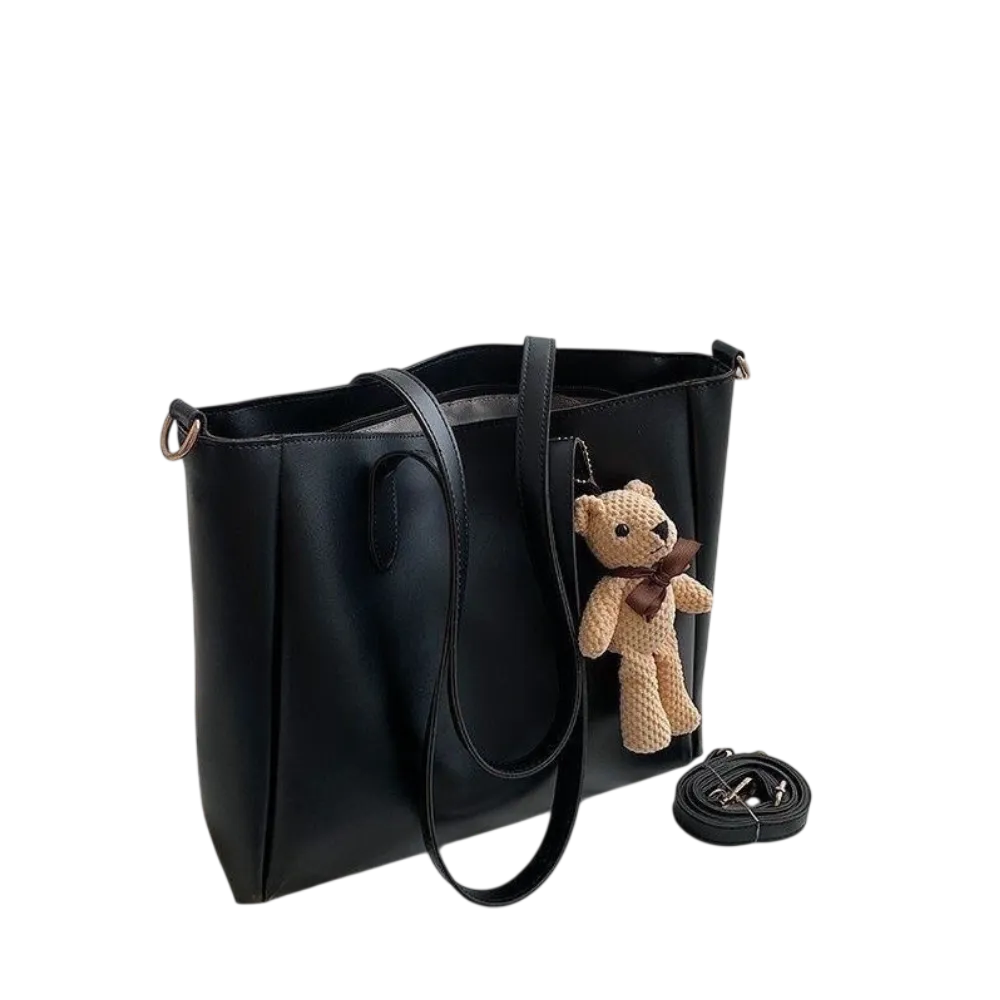
Crodar PU Casual Leather Shoulder Bag
Crodar PU Casual Leather Shoulder Bag with an adjustable strap, comfortable handle, spacious interior, secure zipper, and elegant gold-tone hardware.
Zone 2: Personal Care
Keep cosmetics, tissues, lip balm, hand cream, and similar items together in one small pouch. Personal-care items can leak or transfer color, so grouping them prevents damage to other contents. A clear zippered pouch lets you see what is inside without opening every item.
Zone 3: Work or Occasional Items
Technology accessories, notebooks, documents, or infrequently used items belong in a separate section. For those carrying work essentials, see Everyday Work Bag Essentials for a complete checklist of office-appropriate items.
This zone system maps naturally onto the most common bag structure: a small top pocket, a larger main compartment, and internal divisions or a second pouch area.
Organizing a Small Bag vs. a Large Bag Differently
Small Bags (under 1 liter capacity)
In small bags, every item needs to earn its place. Use a minimalist approach:
- One small pouch for daily essentials only
- Remove bulky packaging from cosmetics
- Limit duplicate items (one set of keys, not two; one compact mirror, not three)
- Choose slim, flat wallets over bulky cardholder cases
Small bags benefit from a rigid organizer or a structured fabric pouch that prevents items from shifting. For guidance on capacity, see Shoulder Bag Sizes Explained.
Large Bags (over 2 liters capacity)
Large bags need boundaries because their extra space makes clutter easy to hide. Create structure with multiple pouches or an organizer insert:
- Reserve the back or base for large flat items (notebooks, tablet)
- Use small pouches to corral loose items (cosmetics, cables, coins)
- Keep a quick-access zone for phone and keys (top front pocket)
- Leave some breathing room so the bag is not completely stuffed
The risk with large bags is that they become permanent storage containers rather than practical daily carry. Set a personal limit—perhaps a maximum of three to four pouches—and review what is inside weekly.
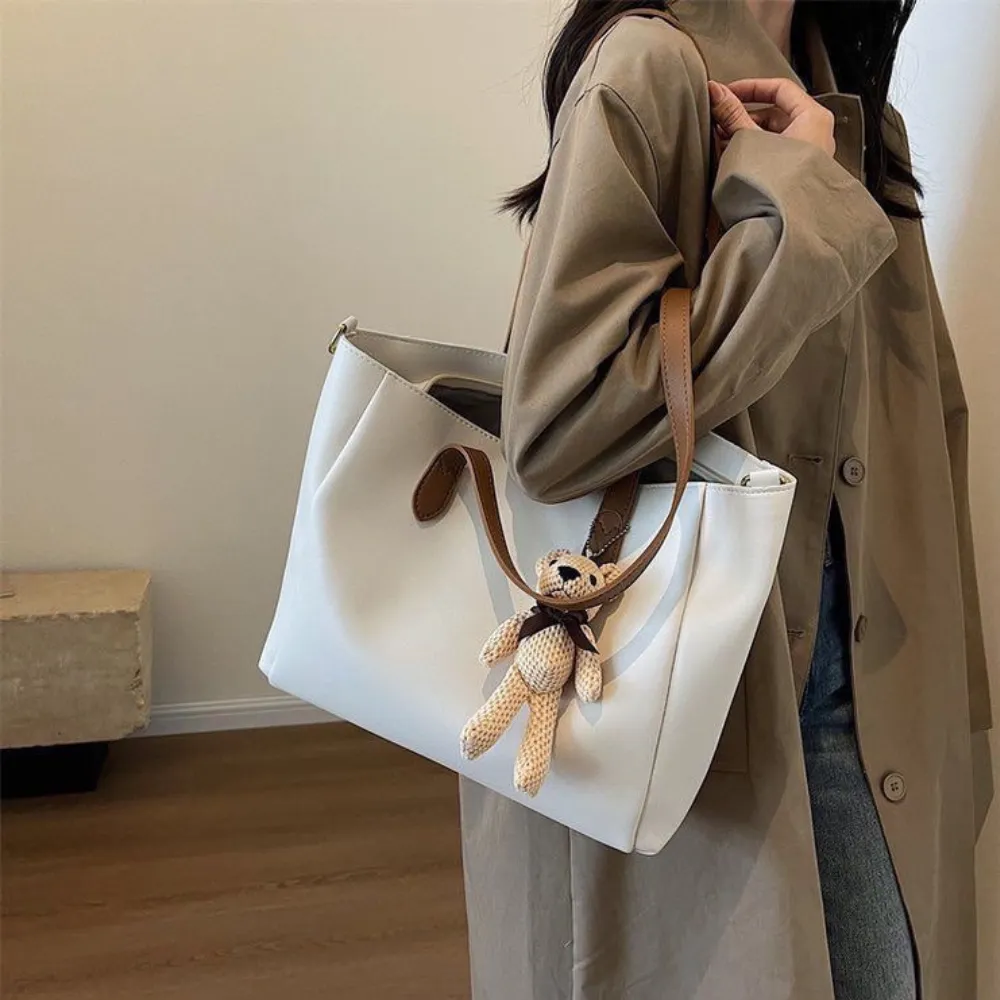
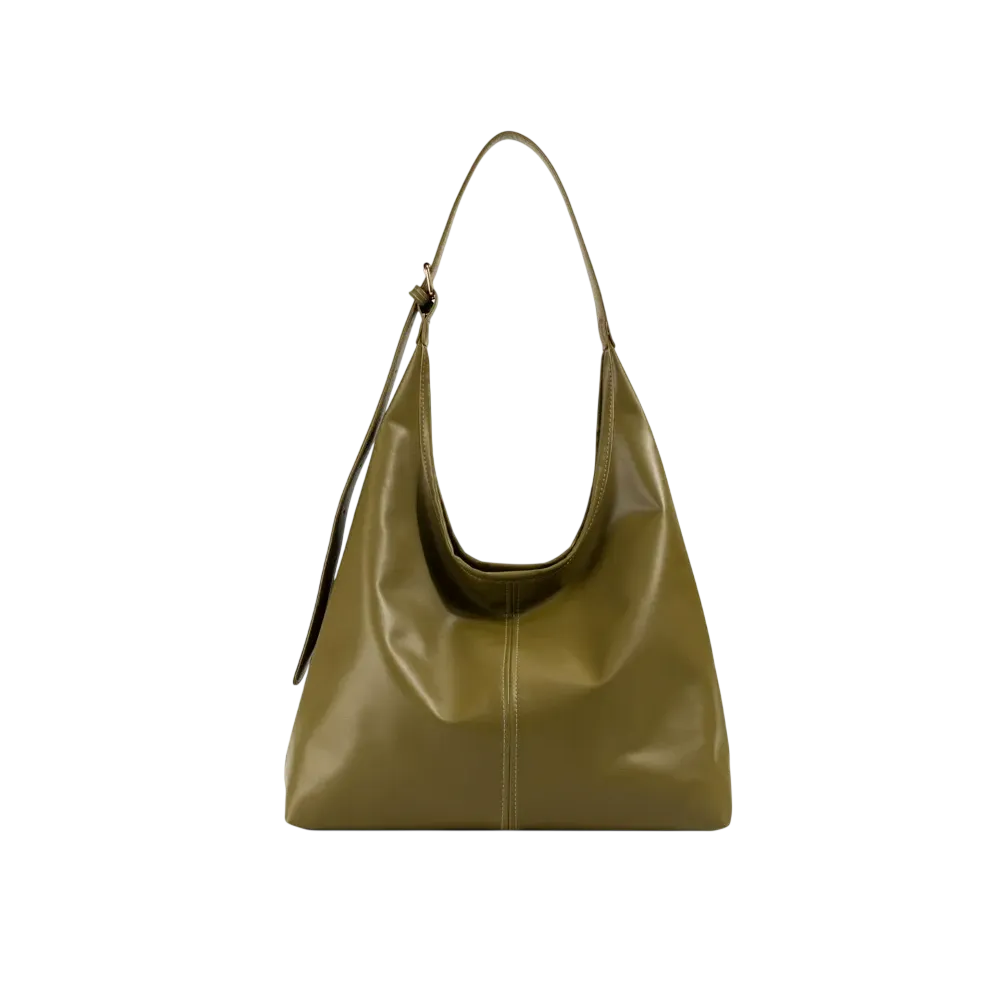
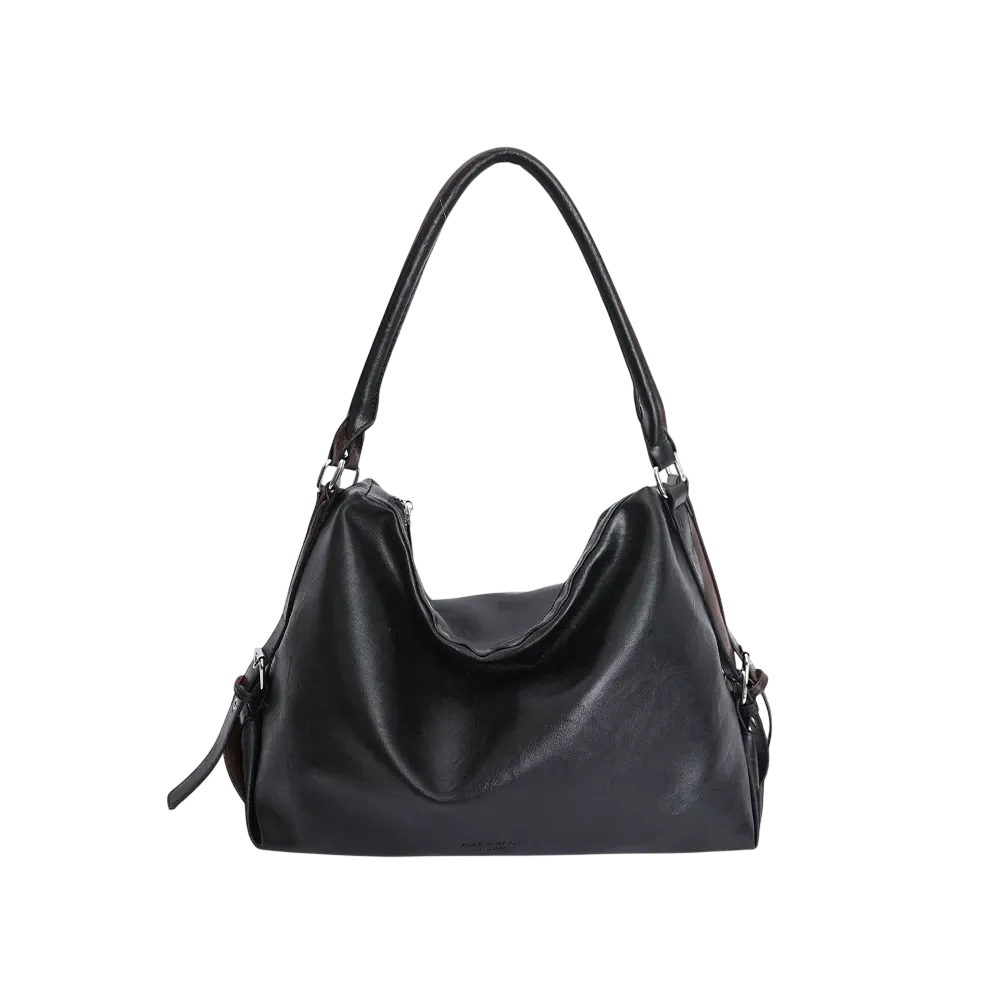
Crodar Stylish Shoulder Bags
Crodar stylish shoulder bags feature elegant leather designs, practical storage, and versatile styles for work, travel, shopping, and everyday fashion.
Quick Weekly Reset Habit
The most effective organization system is the one you can repeat without thinking. A five-minute weekly reset prevents a well-organized bag from slowly returning to chaos:
End-of-Week Reset Routine:
- Empty receipts, wrappers, and packaging
- Remove items that belong in your luggage or office (not your daily bag)
- Check each pouch for duplicates (two pens, two chargers, old cosmetics)
- Wipe down the interior lining to remove crumbs and residue
- Return everything to its designated zone
Do this every Friday or Sunday evening. It is faster than a complete reorganization and keeps the system sustainable.
Why a Weekly Reset Works
A reset is also a chance to notice what you actually use. If a pouch has stayed untouched for two weeks, it is probably carrying items that do not belong in your daily rotation. Moving those items out makes the bag noticeably lighter without changing the bag itself.
For additional storage strategies, see How to Store Handbags to understand how your off-rotation bags should be maintained.
Choosing Pouches and Inserts Wisely
What to Look for:
- Size: Pouches should fit your bag’s proportions without forcing the bag to bulge
- Closure: Zippers are more secure than magnetic snaps, especially for cosmetics and valuables
- Material: Wipe-clean fabrics are practical for cosmetics pouches; breathable linen works for tech accessories
- Color: Neutral colors hide dirt and work with any bag; clear pouches let you see contents
Avoid Over-Organizing
One of the most common mistakes is buying too many small pouches. Each pouch adds bulk, and too many divisions can make packing inflexible. Start with one or two pouches and add only if the system is not working.
If you find that you never use a compartment, that is useful information. Remove it and simplify.
The Real Goal: Finding Things in Seconds
Organization exists to serve one purpose: reducing the time and effort to locate what you need. A beautiful color-coded system that you abandon after two days is less valuable than a simple three-pouch system you use for months.
As you use your bag, notice when you still search for something. That moment tells you where the system needs adjustment. Move the item, add a pouch, or remove it entirely. Over time, your bag becomes easier to use because its layout is built around your real habits—not an Instagram-worthy ideal.
FAQ
Q: Do I really need a bag organizer insert?
A: Not necessarily. Inserts help when a bag has one large open compartment, when you switch between bags frequently, or when you have many small loose items. If your bag already has good internal structure, you might not need one.
Q: What is the best way to organize a small handbag?
A: Use one slim pouch for essentials (phone, keys, wallet), keep personal items minimal, and remove packaging. The key is choosing what to carry rather than buying organizers for a small space.
Q: How often should I clean out my handbag?
A: A weekly five-minute reset prevents clutter. Empty receipts, remove items that do not belong, and check for duplicates. This is faster and more sustainable than a monthly deep clean.
Q: Can I use the same pouches in different bags?
A: Yes, if the pouches are small enough to fit through the openings of all your bags. This works well if you own multiple bags and want to transfer one coordinated set of items rather than rebuilding the interior each time.