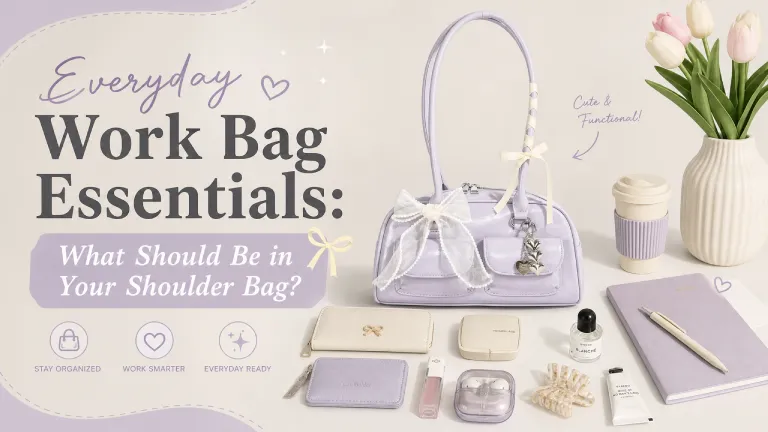
A well-packed work bag can make the difference between a smooth morning and a scramble out the door. But packing smart isn’t about cramming in everything you might possibly need — it’s about knowing what actually earns a spot in your bag, and organizing it so you’re not digging around for your keys during a rushed commute. Here’s what belongs in a well-organized work shoulder bag, and how to keep it that way.
Why an Organized Work Bag Matters
Beyond convenience, an organized bag protects your belongings. A laptop tossed in loose next to a leaking pen or an open snack container is a recipe for a bad day. Dedicated compartments — and a bit of discipline about what actually goes in your bag — go a long way toward keeping both your gear and your bag itself in good shape.
The Essentials Checklist
Tech & Work Items
- Laptop (with a sleeve if your bag doesn’t have a padded compartment)
- Charger and a portable power bank — a 10,000mAh bank is usually enough for a full workday without adding much weight
- Notebook and pen, or a small planner if you’re not fully digital
- Headphones, ideally in a hard case so they don’t get crushed under other items
- A USB flash drive or spare cable, useful for presentations or last-minute file transfers
Personal Care Items
- Travel-size hand sanitizer or wipes
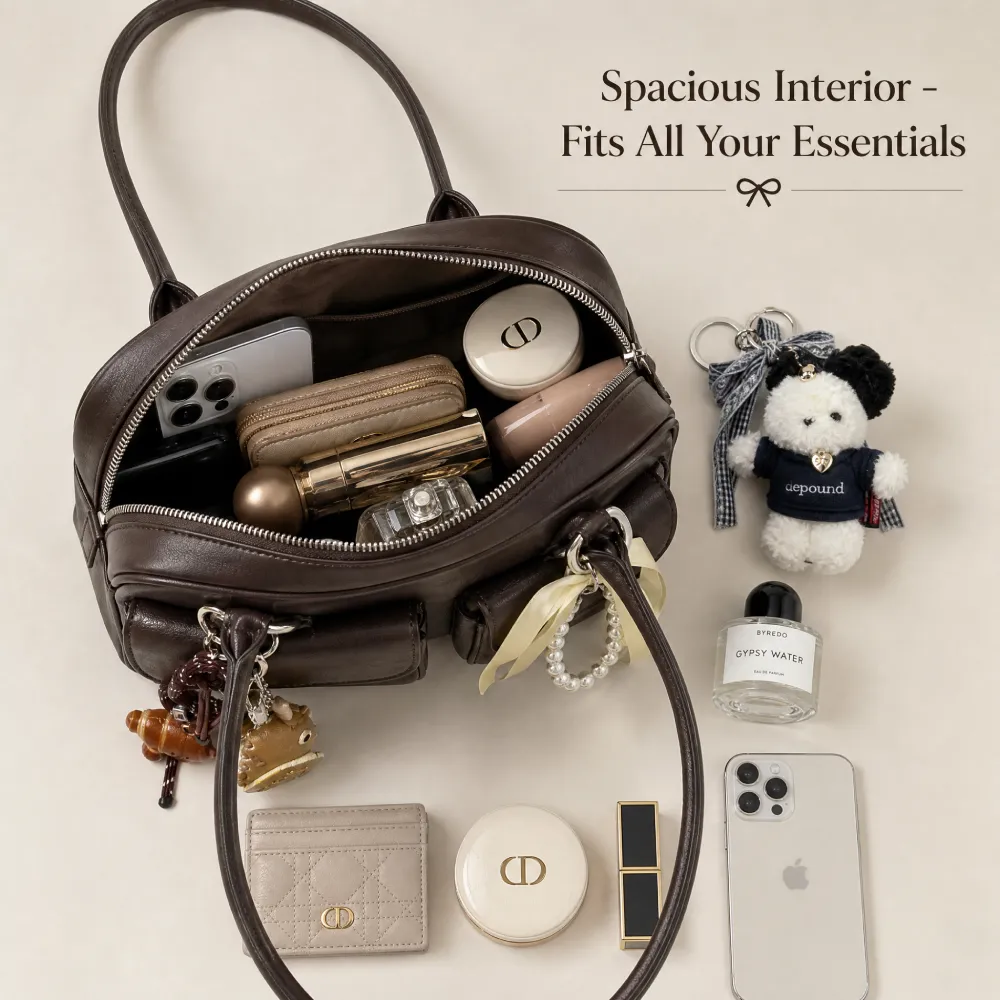
- Lip balm or a compact touch-up kit — a tinted balm and a small pressed powder cover most midday touch-ups without needing a full makeup bag
- Any daily medication you take, ideally in a small labeled pouch so it’s easy to find quickly
- A spare hair tie or small brush, especially useful on humid or windy days
- Tissues or a small pack of blotting papers
Daily Necessities
- Wallet or cardholder
- Keys (ideally clipped to an interior ring, not loose — a loose key ring is one of the most common culprits behind scratched phone screens and torn linings)
- Reusable water bottle, ideally in a side pocket rather than the main compartment so condensation doesn’t reach your electronics
- Phone charger cable, separate from your laptop charger if they use different ports
- A small umbrella during rainy seasons — a compact, sub-200g option won’t weigh the bag down noticeably
Nice-to-Haves Worth Considering
Not everything needs to earn a permanent spot, but a few extras are worth keeping in the bag depending on your routine: a granola bar or small snack for long meeting days, a spare face mask, or a small sewing kit for wardrobe emergencies. The goal isn’t to prepare for every scenario — it’s to cover the ones that actually come up often enough to matter.
Adjusting Your Bag for the Season

What belongs in your work bag shifts a little throughout the year, and building in small seasonal swaps keeps the bag from becoming permanently overstuffed.
Warmer months: A compact fan or cooling mist, sunscreen stick, and sunglasses tend to earn their spot, while heavier items like a full umbrella can often be swapped for a lighter, more compact one.
Colder months: Hand cream, a spare pair of gloves, and a lip balm with SPF are worth adding, along with a slightly larger umbrella if your commute involves more walking exposure.
Rotating a small seasonal pouch in and out — rather than letting warm-weather and cold-weather items pile up together year-round — is one of the simplest ways to keep your bag’s weight and clutter in check.
How to Organize Your Bag by Compartment
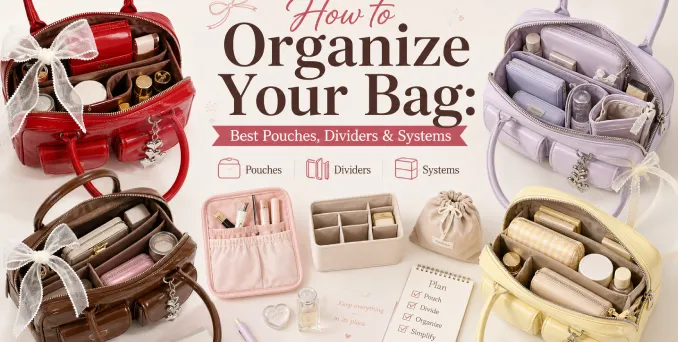
The easiest way to stay organized isn’t to carry less — it’s to give everything a designated spot. Tech goes in a padded or zippered compartment away from anything that could scratch the screen. Small items like keys, cards, and lip balm belong in an interior pocket you can reach without opening the whole bag. And anything you rarely need — a backup charger, an umbrella — can go in the bottom or an outer pocket you’re not accessing constantly.
This is exactly the kind of structure to look for when shopping for a work bag. Our Work Shoulder Bag collection is designed with dedicated compartments for laptops, tech accessories, and daily essentials, so you’re not relying on one big open space to hold everything together.
It’s a habit reflected in broader workplace research, too — reporting from outlets like Forbes on daily productivity habits has repeatedly pointed to small organizational systems, including how people pack and prepare their bags the night before, as a meaningful factor in reducing morning stress and decision fatigue.
Common Organizing Mistakes to Avoid
Even with the right items, a few habits tend to undo an otherwise well-packed bag:
- Letting receipts and loose papers accumulate. They add bulk and weight without you noticing, and make it harder to find what you actually need. A quick weekly clear-out keeps this in check.
- Using the main compartment for everything. Without designated pockets, small items sink to the bottom and larger items get worn or scratched by keys and other hard objects rattling around loose.
- Carrying duplicate chargers or cables “just in case.” Unless you regularly need a backup, one set per device is usually enough — duplicates are one of the most common sources of unnecessary weight.
- Ignoring the bag’s actual capacity. A bag that’s stretched to its limit daily will wear out faster and lose its shape sooner than one used within its intended capacity.
Styling Your Work Bag for Different Office Dress Codes
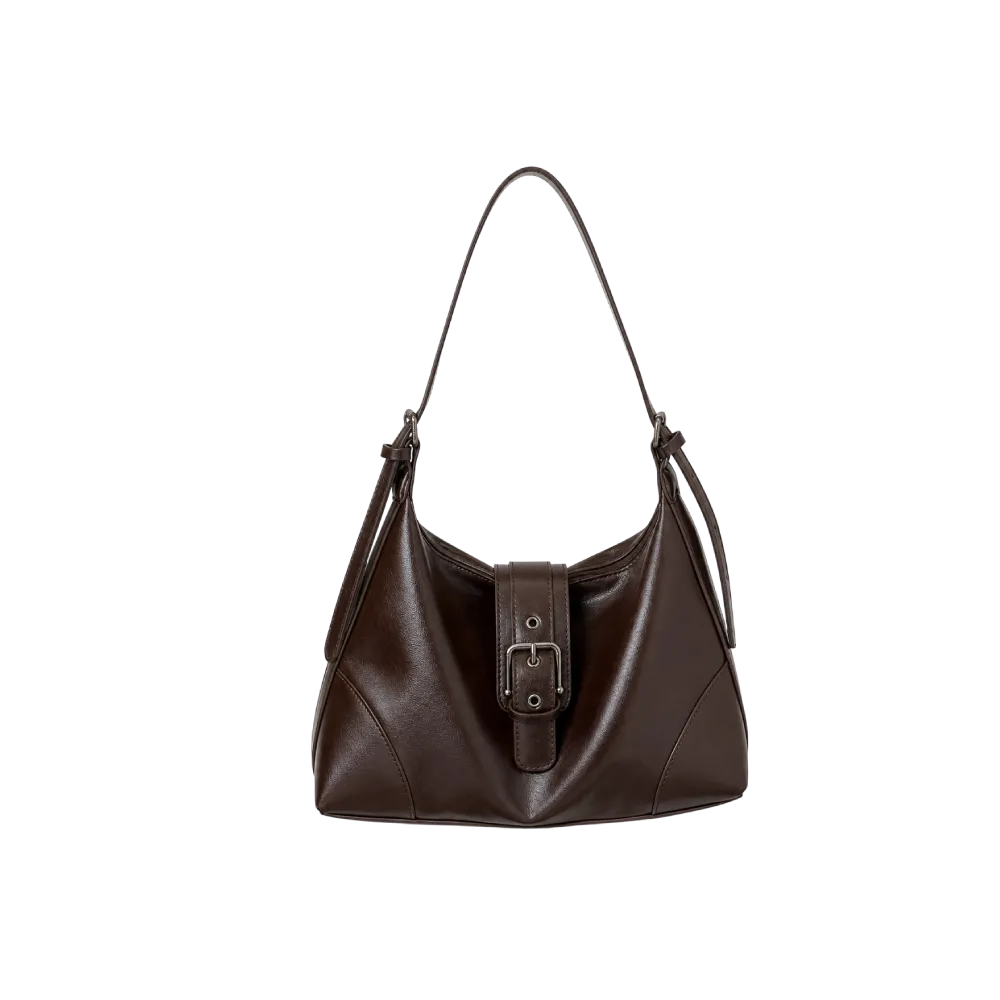
What’s in your bag matters, but so does how the bag itself fits your workplace. A structured leather shoulder bag in a neutral tone works well for business casual and formal offices alike, while a slightly more relaxed silhouette can suit creative or hybrid workplaces where the dress code is more flexible. For more on matching your bag to specific outfits and settings, our guide on How to Style a Shoulder Bag for Different Outfits & Occasions covers pairing tips for everything from formal meetings to after-work plans.
FAQ
How many compartments does a work bag actually need?
Most people do well with three functional zones: one for tech (laptop, charger), one for small daily items (keys, cards), and one open area for anything else. More compartments than that often go unused.
How do I stay organized in a smaller-capacity bag?
Prioritize ruthlessly — keep only what you use daily inside the bag, and store backups (extra chargers, spare masks, etc.) at your desk instead. Small pouches can also help group similar items so you’re not searching loose in the bottom of the bag.
Should I keep my wallet and makeup bag in separate pouches?
Yes — separating them protects your cards and cash from makeup spills, and makes it faster to grab just what you need without unpacking the whole bag.