
PU leather has become the go-to material for crossbody bags among people who want the polished look of leather without the weight, cost, or upkeep that comes with genuine hide. Whether you’re shopping for your first PU leather crossbody or trying to figure out why quality varies so much between brands, here’s what actually matters when buying one.
Why PU Leather Works So Well for Crossbody Bags
Crossbody bags are worn close to the body for extended stretches of the day, which makes weight and structure more important here than for almost any other bag style. PU leather is lighter than genuine leather, which translates directly into less fatigue on the shoulder and neck over a full day of wear — a meaningful difference for anyone who carries a bag from morning commute through evening plans without taking it off.
PU leather also holds a crisp, structured shape well, since the polyurethane coating sits over a stable fabric base rather than relying on a natural hide’s variable thickness. That structural consistency is exactly what a crossbody bag needs to keep its silhouette while sitting against the body all day, rather than sagging or losing shape.

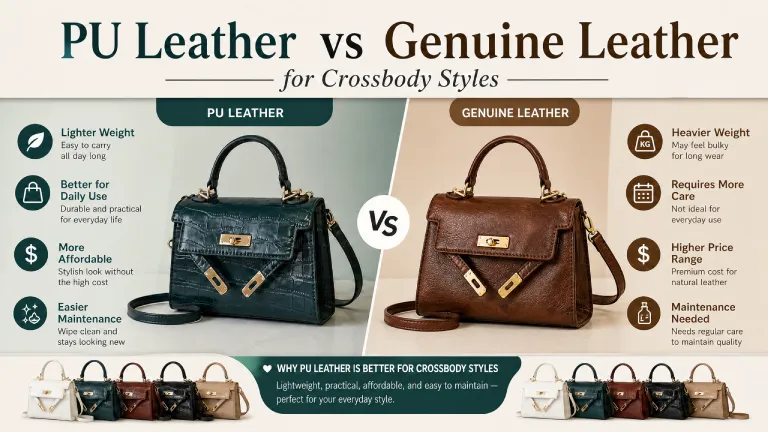
PU Leather vs Genuine Leather for Crossbody Styles
The two materials serve slightly different priorities. Genuine leather develops a natural patina and can last decades with the right care, but it’s heavier, more expensive, and needs regular conditioning to stay in good shape. PU leather trades some of that long-term character for practical, everyday advantages: it’s significantly more water-resistant, easier to wipe clean, lighter to carry, and far more consistent in appearance from bag to bag, since it isn’t subject to the natural variation of animal hide.
For a bag you’re wearing against your body daily — through commutes, errands, and changing weather — those practical advantages tend to matter more than the slower-developing character genuine leather offers. For the fuller breakdown of how the two compare on durability, cost, and sustainability, see our guide on Genuine Leather vs PU Leather: Which Is Better for a Shoulder Bag? — the core comparison applies just as directly to crossbody styles.
How PU Leather Is Actually Made
Understanding the basic construction helps explain why quality varies so much between bags. PU leather starts with a base fabric — usually a woven polyester or cotton blend — onto which a layer of polyurethane is applied and then embossed with a grain pattern to mimic natural leather texture. The thickness and quality of that polyurethane layer, along with how well it bonds to the base fabric, is what ultimately determines how the material looks, feels, and holds up over time. Cheaper PU leather often uses a thinner coating over a lower-quality backing, which is why it tends to crack or peel sooner — there’s simply less material buffering the surface from everyday flexing and friction.
The Sustainability Angle
PU leather has also become a meaningful part of the broader shift toward cruelty-free and lower-impact fashion materials. Because it doesn’t rely on animal hide, it sidesteps the resource-intensive tanning process associated with genuine leather production, which has made it an increasingly popular choice for shoppers looking for vegan-friendly accessories without sacrificing the structured, polished look leather offers. Market data compiled by Statista on the vegan leather industry shows consistent year-over-year growth in the category, reflecting this same shift in consumer preference. It’s not without its own environmental considerations as a synthetic material, but for many buyers, avoiding animal byproducts is the deciding factor over material origin alone.
What Separates Good PU Leather from Cheap PU Leather
Not all PU leather is created equal, and the quality gap is exactly where most buyer disappointment comes from. A few things to check before buying:
- Surface texture and finish — higher-quality PU leather has a consistent, fine-grain texture rather than an obviously uniform, plastic-like surface
- Flexibility without cracking — gently flex a corner of the bag if you can see it in person; quality PU leather bends smoothly, while lower-grade material shows white stress lines almost immediately
- Backing material — a woven fabric backing (visible on the interior seams) tends to hold up better over time than a thin, brittle backing that can tear at stress points
- Stitching consistency — even, reinforced stitching at the strap attachments and seams is a strong indicator of overall construction quality, regardless of the outer material
A well-made PU leather bag from a quality manufacturer will often outlast a poorly constructed genuine leather bag, since construction quality matters as much as material choice. Manufacturing standards bodies, including guidance referenced by organizations like the Leather Working Group on synthetic alternatives, have increasingly emphasized backing quality and coating durability as the key differentiators in synthetic leather performance — which lines up closely with what shoppers can actually check for themselves before buying.
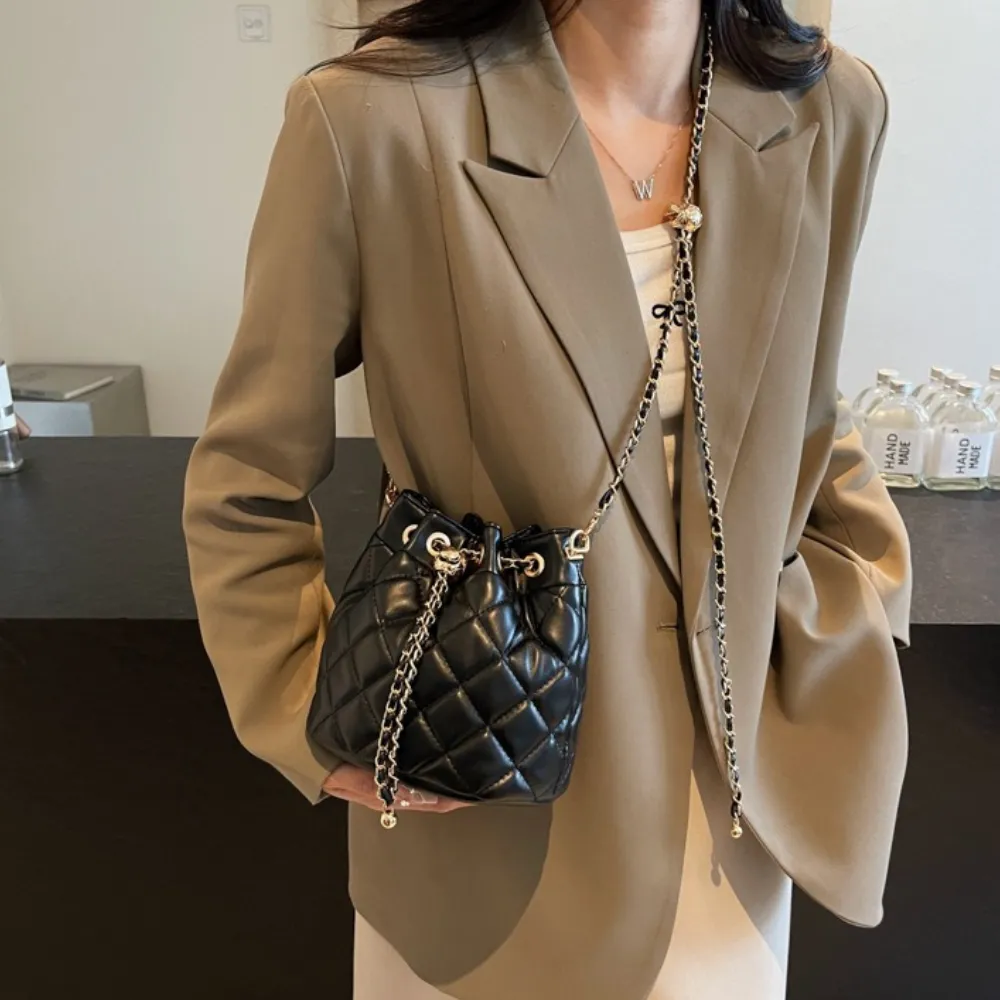
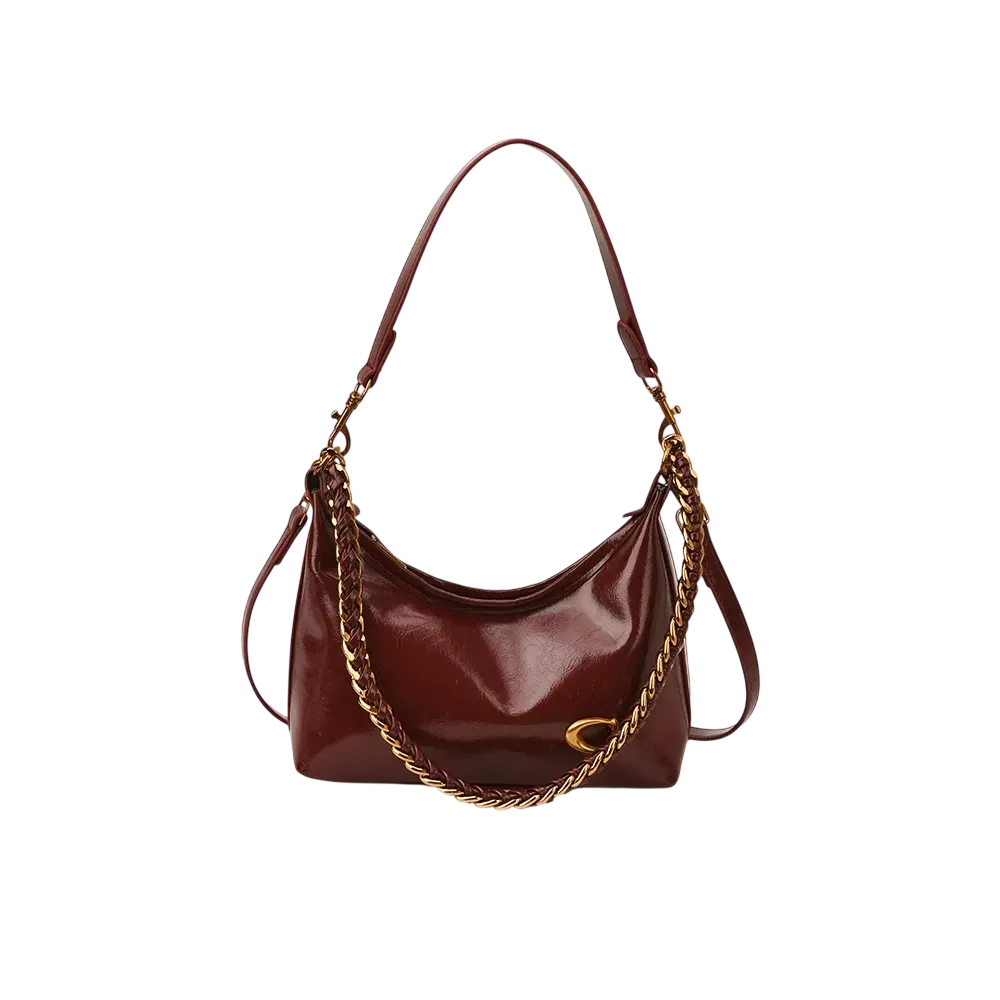
Crodar Textured Chain Crossbody Bag
The Crodar Textured Chain Crossbody Bag combines a stylish textured finish with a polished metal chain and practical drawstring closure.
Color and Finish Options
One underrated advantage of PU leather is consistency in color and finish — since the material isn’t subject to the natural variation of animal hide, a black PU leather bag will look identical to another from the same batch, and rich, saturated colors (a deep red or cobalt blue, for example) tend to render more vibrantly on PU leather than on natural leather, which can affect how pigment absorbs. This makes PU leather a particularly strong choice for bags in bold, trend-forward colors, where consistency matters as much as the shade itself.
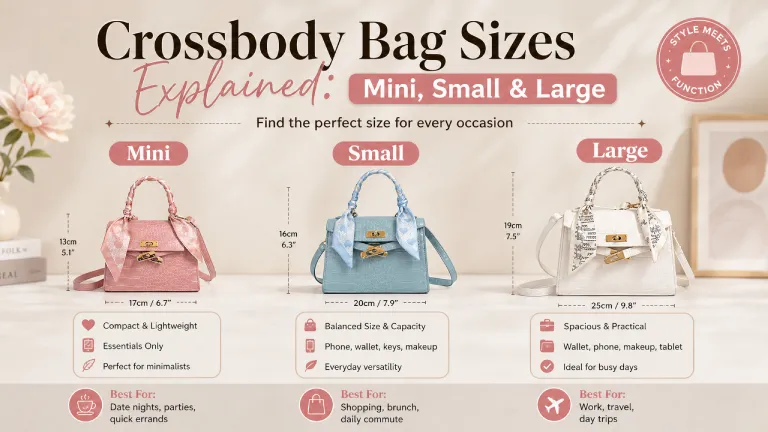
Mini PU Leather Crossbody Bags: What to Look For
Mini crossbody bags face a specific structural challenge: less material overall means less inherent rigidity, so construction quality matters even more than it does with larger bags. When shopping for a PU leather mini crossbody, pay particular attention to:
- Reinforced edges and stitching, since smaller bags see proportionally more stress at seams relative to their size
- A structured base panel, which helps a small bag hold its shape rather than collapsing in on itself when only partially full
- Hardware quality, since small bags often rely more heavily on clasps and zipper pulls as the main functional and visual details
For more on how mini sizing affects capacity and use case more broadly, our guide on Crossbody Bag Sizes Explained covers the full range from mini to large.
Vegan Suede & Other PU-Based Textures
Beyond smooth PU leather, vegan suede has become a popular alternative texture for crossbody bags, offering a softer, more matte finish while still avoiding animal-derived materials entirely. Vegan suede tends to show water spots and surface marking more easily than smooth PU leather, so it generally suits lower-friction, drier-climate use better than daily rugged wear. It’s worth considering if you’re drawn to a softer aesthetic but still want a low-maintenance, cruelty-free material — just expect to handle it a little more carefully than a smooth PU leather bag.
Caring for a PU Leather Crossbody Bag
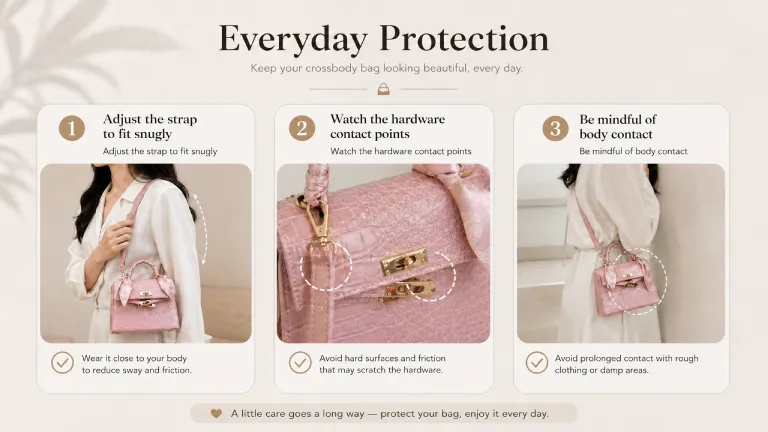
One of PU leather’s biggest practical advantages is how little maintenance it needs compared to genuine leather — no conditioning required, and most day-to-day marks wipe away with a damp cloth. Because crossbody bags see more direct body contact than shoulder bags or totes — brushing against clothing, absorbing body heat, occasional light perspiration — a quick wipe-down every so often goes a long way toward keeping the bag looking new. Our full leather care guide covers cleaning and storage steps in more detail, including the specific do’s and don’ts for PU leather.
Common Misconceptions About PU Leather
“PU leather always looks obviously fake.” This was a fairer criticism a decade ago than it is now. Advances in embossing and finishing techniques mean higher-quality PU leather can closely replicate the grain and texture of natural leather, particularly in structured bag styles where shape matters more than close-up texture detail.
“PU leather is only for budget bags.” Price and material aren’t as tightly linked as people assume. Plenty of mid-range and premium bags now use PU leather deliberately — for its consistency, lighter weight, and easier care — rather than as a lower-cost substitute.
“All PU leather cracks eventually.” Cracking is typically a sign of a thin coating, poor backing, or excessive heat and sun exposure, not an inevitable outcome of the material itself. Properly made and reasonably cared-for PU leather can hold up well for years without cracking.
FAQ
Is PU leather good quality for a crossbody bag? Yes, provided it’s well-made. Quality varies significantly between manufacturers, so checking texture, flexibility, and stitching consistency in person (or in detailed product photos) matters more than the material label alone.
How long does a PU leather crossbody bag typically last? With reasonable care, a well-constructed PU leather crossbody bag generally holds up well for several years of regular use before showing significant wear.
Does PU leather crack or peel over time? Lower-quality PU leather is more prone to cracking or peeling, especially with heat or sun exposure, while higher-quality PU leather with a proper fabric backing holds up considerably better over years of regular use.
What’s the difference between suede and vegan suede? Suede is made from the underside of animal hide, giving it a soft, napped texture, while vegan suede achieves a similar look and feel using synthetic microfiber materials — without any animal-derived components.
Is PU leather the same as pleather? They’re closely related — “pleather” is often used as a general, informal term for synthetic leather, while “PU leather” specifically refers to polyurethane-coated material. Some lower-quality synthetic leathers use PVC instead of PU, which tends to be stiffer and less breathable, so the two terms aren’t always perfectly interchangeable.
Can PU leather bags get wet? Yes — one of PU leather’s practical advantages is water resistance. Light rain or splashes typically wipe off easily without damaging the material, unlike genuine leather, which can water-spot or stain if not dried and treated promptly.