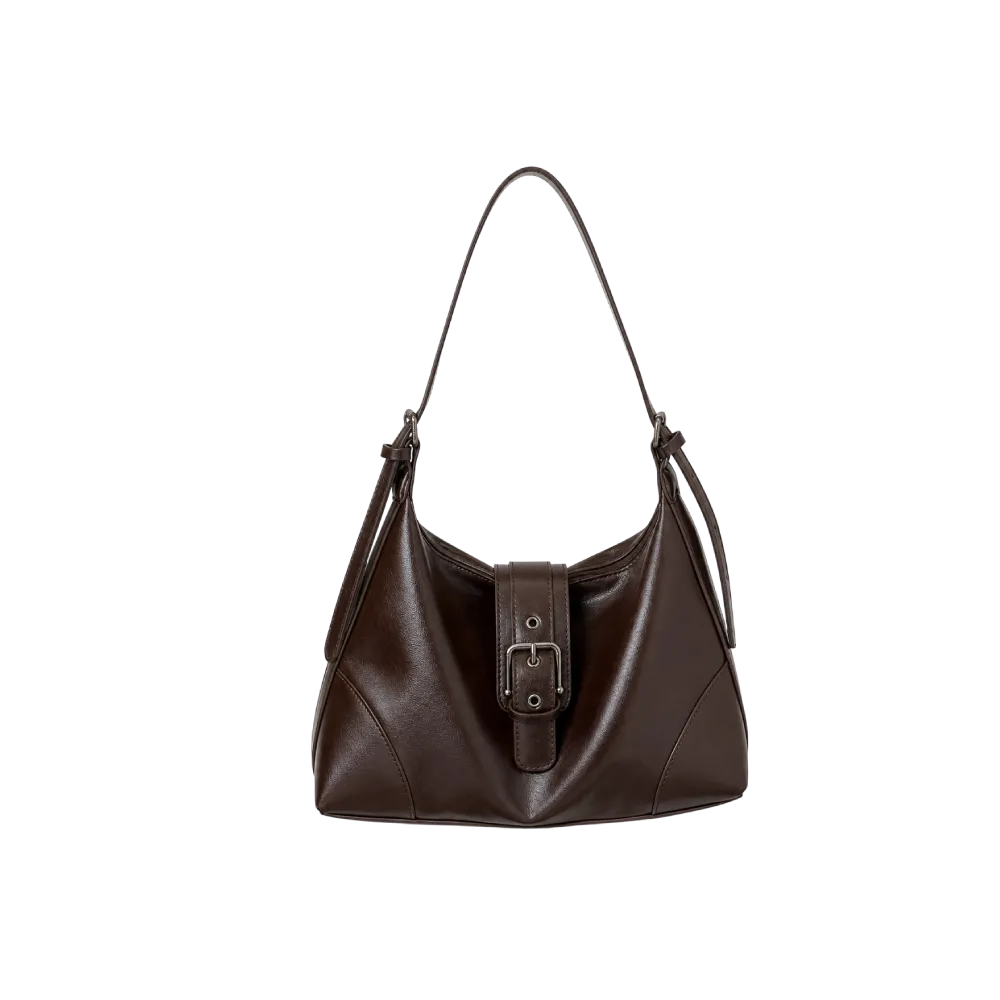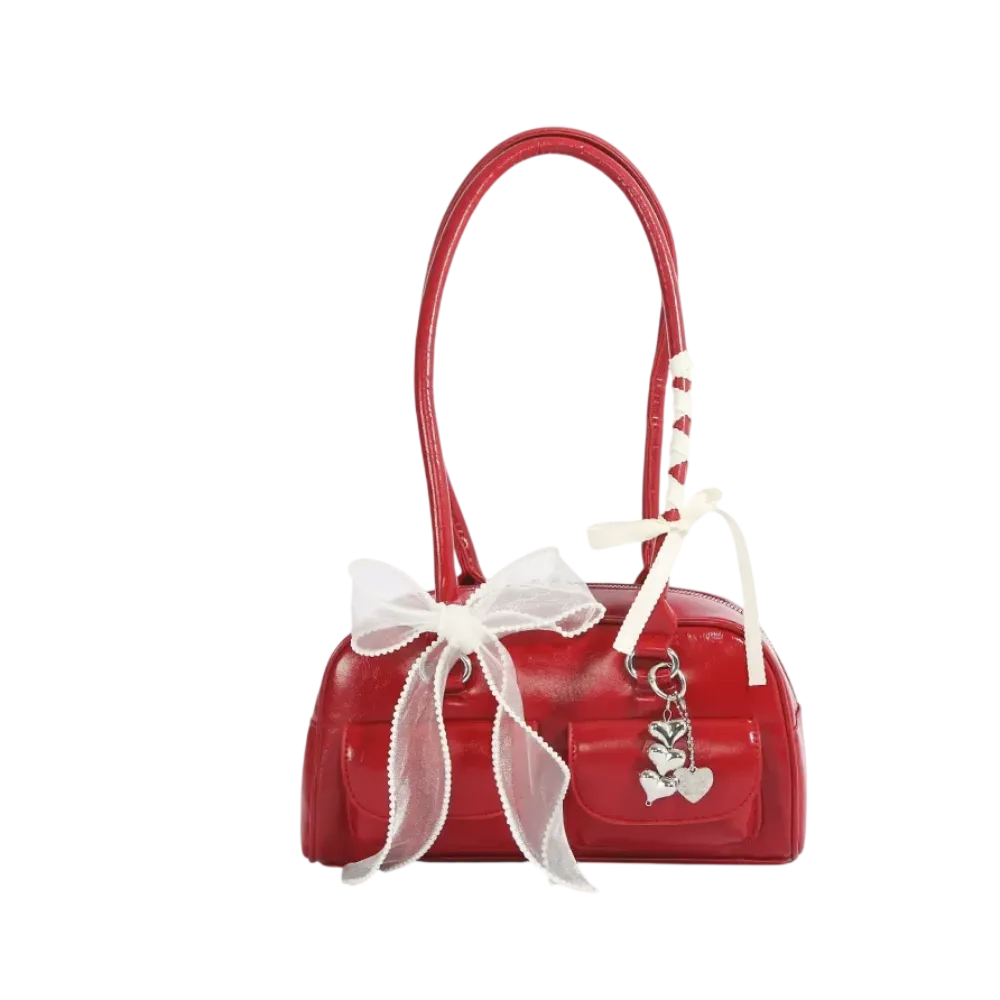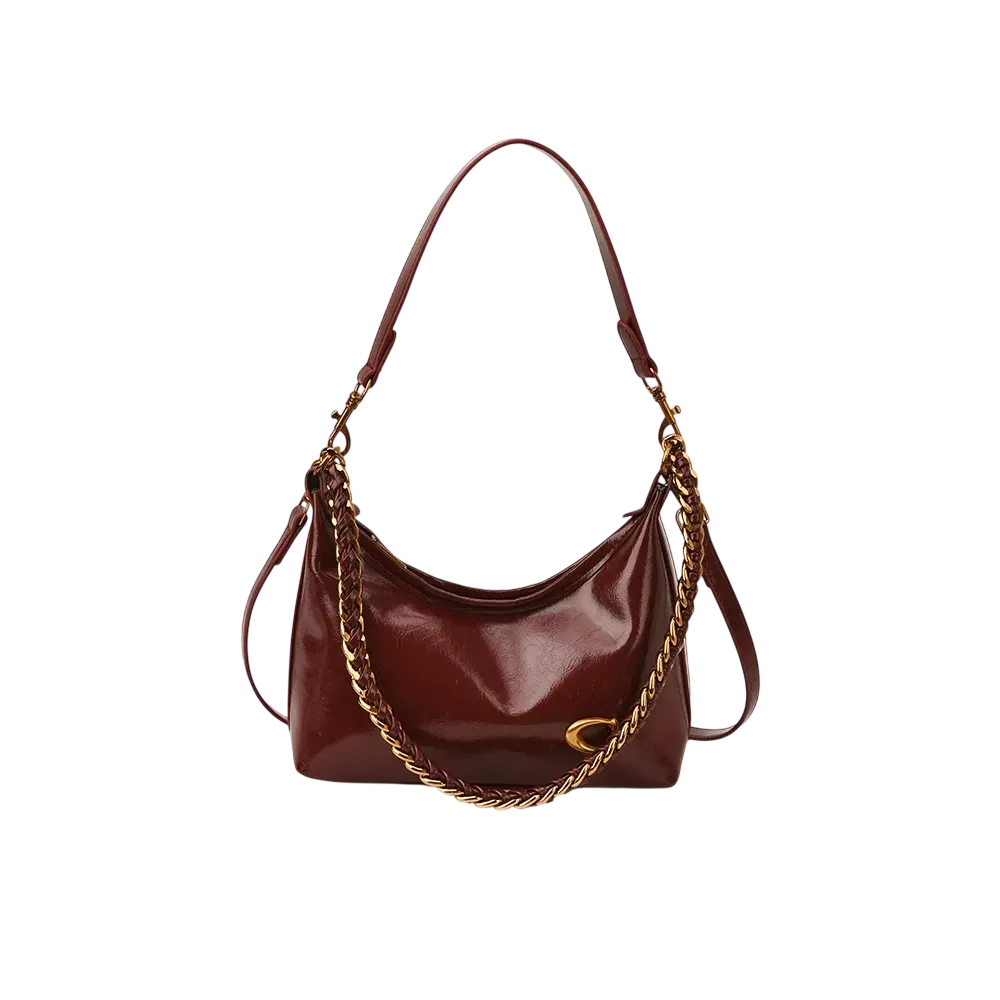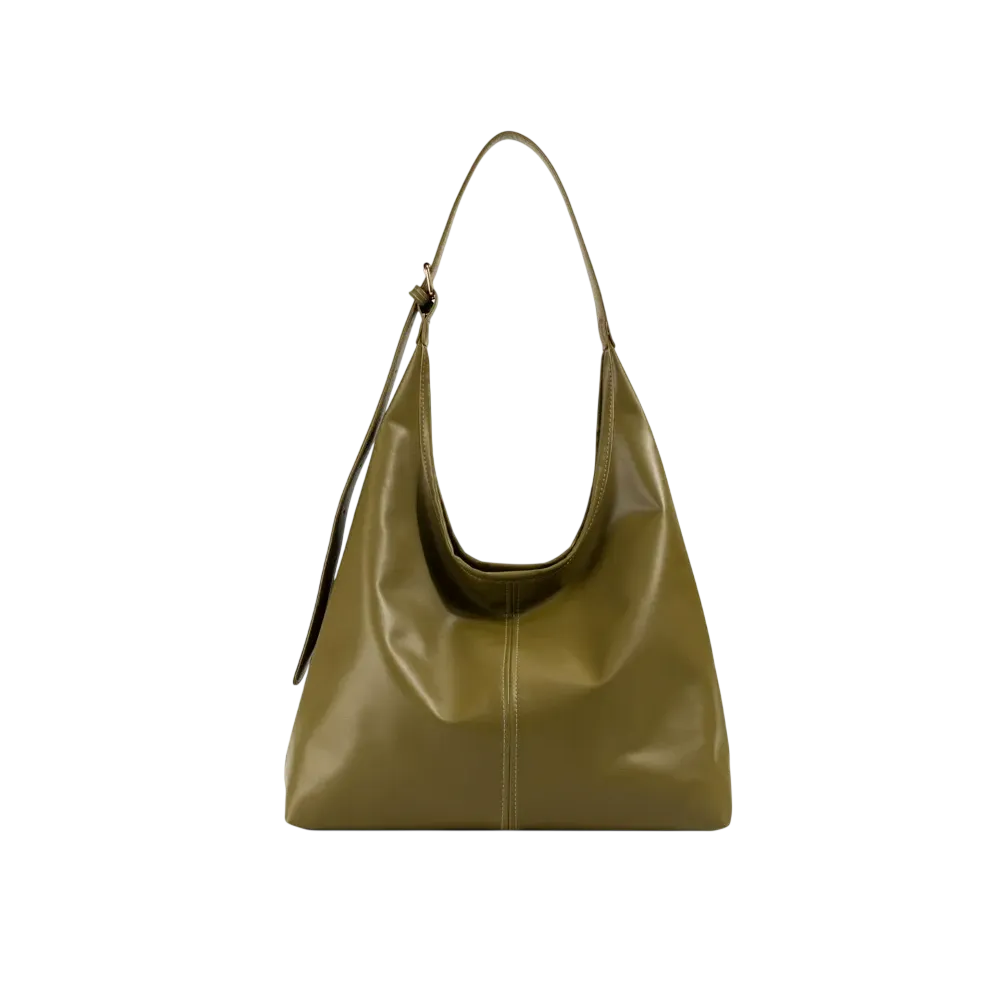
Maybe you have many handbags, and you must span so much cost for it. But did you know how to clean it for keep long? PU leather and polyester are two of the most common materials in everyday handbags — both prized for being lightweight, affordable, and far lower-maintenance than genuine leather. But “low-maintenance” doesn’t mean “no cleaning routine at all,” and the two materials actually respond differently to moisture, heat, and certain cleaning products. Here’s how to clean both safely using things you likely already have at home.
PU Leather vs. Polyester: Why the Cleaning Approach Differs
PU (polyurethane) leather has a coated, non-porous surface — similar in principle to genuine leather, just synthetic — which means cleaning is mostly about wiping the surface rather than deep-cleaning fibers. Polyester, by contrast, is a woven synthetic fabric, so dirt and stains can settle into the weave itself rather than sitting purely on top, and it tolerates a bit more direct moisture than a coated PU surface generally should.
Knowing which material (or combination — many bags mix a PU leather body with polyester lining or trim) you’re working with helps you avoid over- or under-cleaning either part.
Household Items That Are Safe to Use
- Mild soap and warm water — a small amount of gentle dish soap or hand soap diluted in water is the safest all-purpose solution for both PU leather and polyester
- A soft microfiber cloth — for wiping PU leather surfaces without scratching the coating
- A soft-bristled brush — useful for working soap into polyester’s woven texture or into PU leather’s seams and embossed detailing
- White vinegar diluted with water (roughly one part vinegar to two parts water) — helpful for light odor or mild discoloration on either material, though always spot-test first

Household Items to Avoid
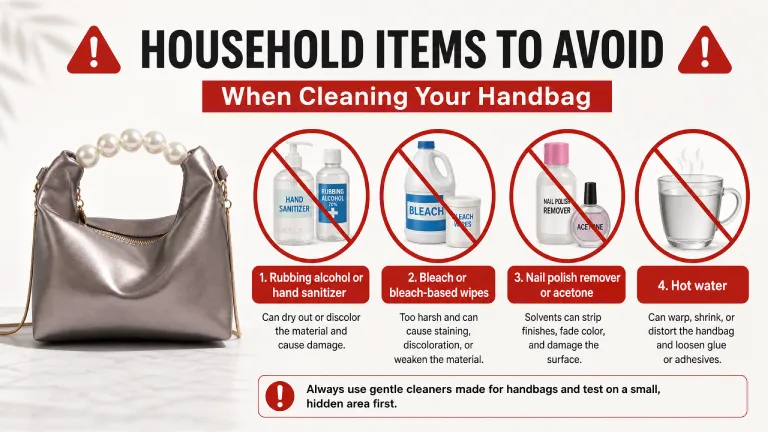
- Rubbing alcohol or hand sanitizer — can dull, discolor, or dry out PU leather’s coated surface; also risks fading polyester’s dye
- Bleach or bleach-based wipes — too harsh for both materials, with a high risk of discoloration or fiber damage on polyester specifically
- Nail polish remover or acetone — will break down PU leather’s surface coating almost immediately
- Hot water — polyester can be prone to shrinking or texture changes under high heat, and hot water can also affect the adhesive bonding in PU leather’s layered construction
Step-by-Step Cleaning Process for PU Leather
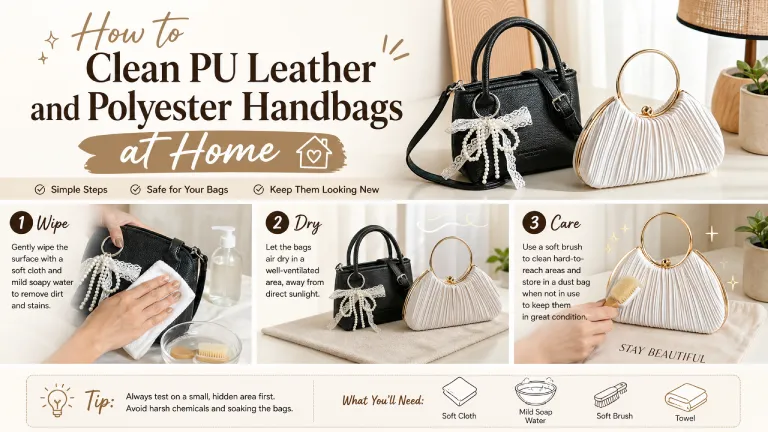
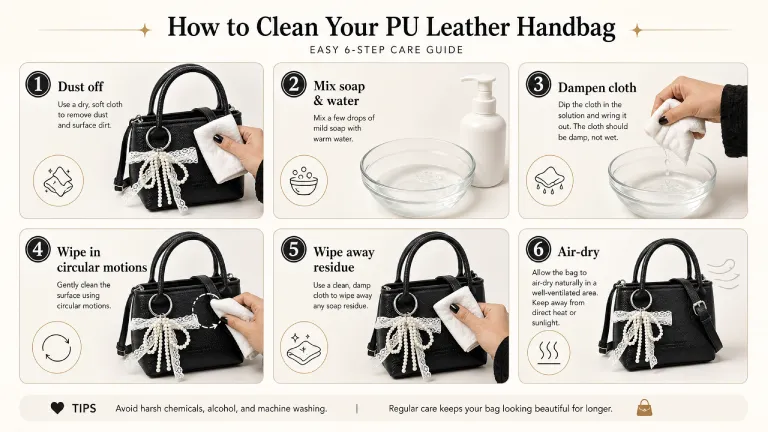
- Dust off the exterior with a dry, soft cloth to remove loose dirt before introducing moisture.
- Mix a small amount of mild soap with warm (not hot) water.
- Dampen a cloth — not the bag — so it’s barely damp, not wet.
- Wipe the surface in gentle, circular motions, working section by section.
- Wipe away soap residue with a second clean, slightly damp cloth.
- Air-dry fully away from direct heat or sunlight before using or storing the bag again.
PU leather doesn’t require conditioning the way genuine leather does — this is one of its biggest everyday advantages, and one reason it’s become such a popular material for low-maintenance bags.
Step-by-Step Cleaning Process for Polyester
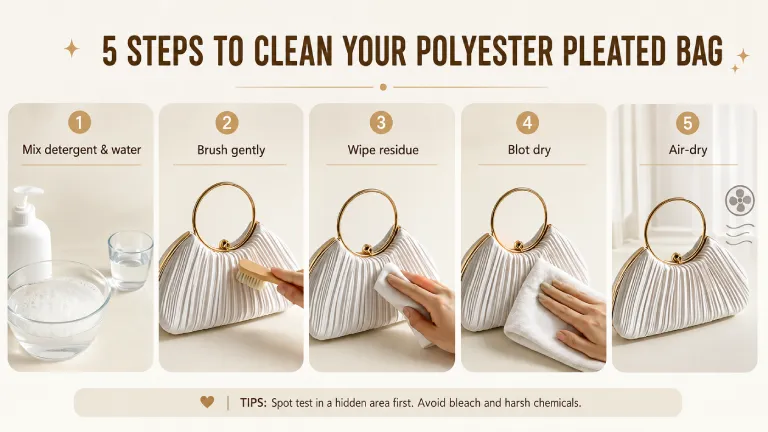
- Mix a small amount of mild detergent with cool to lukewarm water.
- Dip a soft-bristled brush into the solution and gently work it into the fabric, focusing on any visibly soiled areas.
- Wipe away soap residue with a clean, damp cloth, going over the area a couple of times to fully rinse out the detergent.
- Blot with a dry towel to remove excess moisture — avoid wringing or twisting, which can distort the shape of structured polyester panels.
- Air-dry fully, away from direct heat, which can affect polyester’s texture and finish over time.
Dealing with Common Stains
Oil-based stains (makeup, hand cream) on PU leather: Blot immediately with a dry cloth to absorb as much as possible before it sets, then follow the standard soap-and-water cleaning steps. Avoid rubbing, which can spread the stain into surrounding areas.
Ink or dye transfer on polyester: Treat as soon as possible with a small amount of mild detergent applied directly to the stain, gently worked in with a soft brush, then rinsed thoroughly. Older, set-in stains are considerably harder to fully remove at home.
General grime buildup at handles or straps: This is one of the most common wear points on both materials, since it gets the most direct contact with skin and oils. A slightly more concentrated soap solution and a soft brush, used a bit more frequently on just this area, helps prevent buildup from becoming a deeper stain over time.
When to Stop and Call a Professional
A few situations are worth handing off rather than continuing to treat at home:
- Deep-set mold or mildew, particularly on polyester, which can trap moisture in its weave more than a coated PU leather surface would
- Stains that don’t respond after one or two gentle cleaning attempts — repeated aggressive scrubbing at this point often does more damage than good
- Peeling or cracking PU leather, which is a material degradation issue rather than something a cleaning routine can fix
- High-value or hard-to-replace bags, where the cost of professional cleaning is low relative to the risk of a DIY mistake
For more on the broader care routine beyond spot-cleaning — including storage and long-term maintenance — see our guide on How to Store Handbags.
FAQ
Can I use the same cleaning method for PU leather and polyester on the same bag? Not exactly — treat each material according to its own guidelines above, since PU leather should stay closer to “damp, not wet,” while polyester can tolerate slightly more direct moisture. When in doubt, use the gentler PU leather method on any area you’re unsure about.
Does PU leather need conditioning like genuine leather? No — this is one of PU leather’s practical advantages. It doesn’t require conditioning to stay flexible or prevent cracking the way genuine leather does; regular gentle cleaning is generally all it needs.
Why does my polyester bag smell musty even after cleaning? This is usually a sign moisture got trapped in the fabric’s weave during drying. Make sure the bag is completely air-dried in a well-ventilated space before using or storing it again, and consider a light vinegar-water wipe if the smell persists.