
Why Waterproof Handbags Are Essential for Women Who Live in Real Weather
A waterproof handbag is not a luxury—it is a practical necessity in climates where rain, sleet, or winter weather is regular. A bag that soaks through when exposed to rain destroys everything inside it: your phone, your wallet, important documents, cosmetics. A waterproof handbag protects your belongings and maintains professional appearance even in weather that would destroy an ordinary bag.
Understanding what makes a handbag truly waterproof, rather than just water-resistant, helps you choose a bag that will reliably protect your items during real weather events, not just light drizzle.
The Difference Between Waterproof and Water-Resistant
Water-resistant means the bag resists water absorption to some degree but will eventually soak through with extended exposure. Waterproof means the bag actively repels water and prevents it from penetrating to the interior. These are fundamentally different levels of protection.
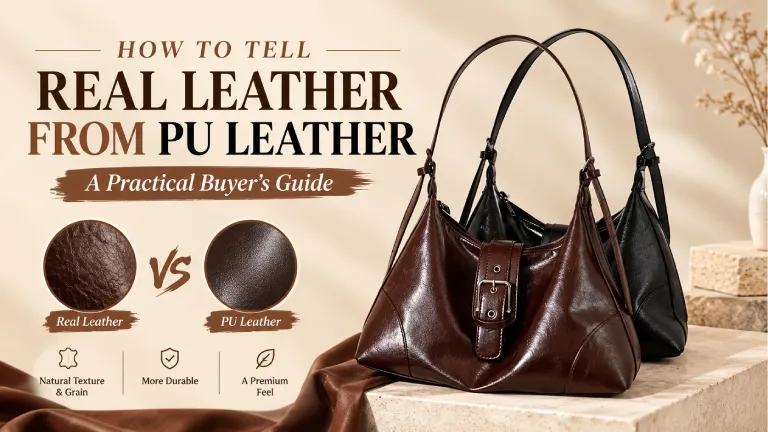
A water-resistant PU leather bag survives light rain and splashes but may soak through in heavy downpour. A truly waterproof bag with sealed seams survives heavy rain, being submerged briefly, or wet conditions without water reaching the interior. please see our guide PU leather vs genuine leather.
For handbags, “waterproof” usually means water-resistant with sealed seams and water-resistant zippers. Completely waterproof (sealed, no openings) bags exist but are typically specialty backpacks rather than traditional handbags. Practical handbags for everyday use offer the highest level of waterproofing feasible while maintaining functionality and style.
Materials That Protect Against Water
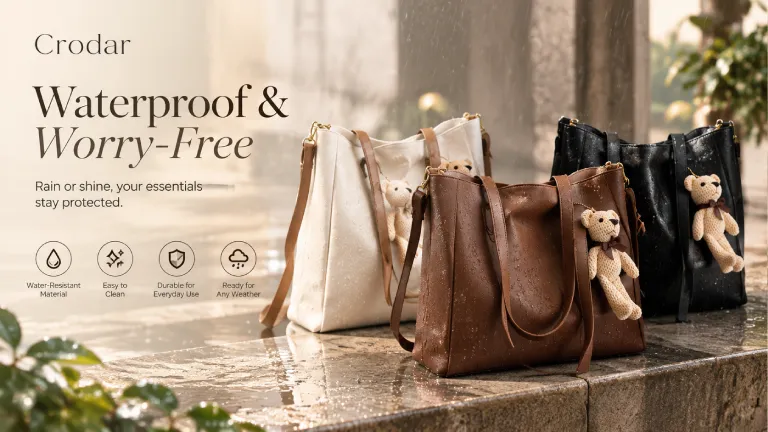
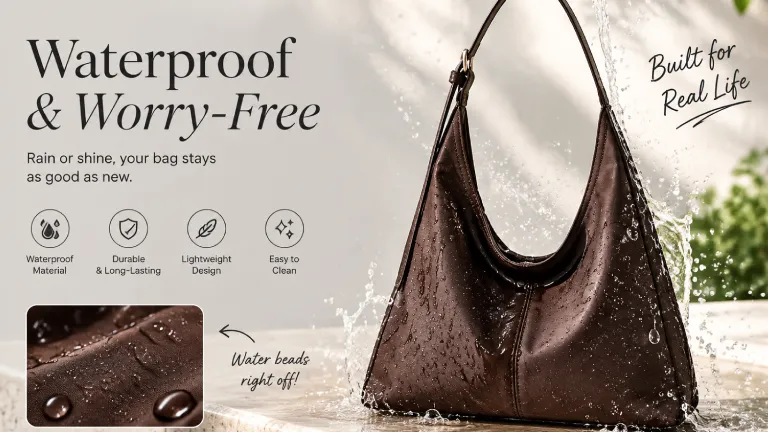
High-quality PU leather provides excellent water resistance when treated properly. The polyurethane coating actively repels water. This is one reason PU leather is so practical—it offers built-in water resistance without requiring the extensive conditioning that genuine leather needs.
Technical synthetic materials and nylon with water-resistant coating also work well for waterproof handbags. Genuine leather can be treated with protective spray to increase water resistance, but untreated leather absorbs water and is not waterproof.
According to EPA guidance on material durability, materials with protective surface treatments prove most durable in repeated wet conditions. Bags with sealed seams and treated materials provide optimal protection.
Sealed Seams: The Critical Factor
A bag can have waterproof material but fail to be waterproof if seams are not sealed. Water enters through any opening, including stitched seams where thread creates tiny gaps in the material. Professional waterproof bags have sealed seams where the stitched area is also sealed with waterproof tape or coating.
Examine seams carefully when evaluating waterproof handbags. Seams that feel sealed and smooth (where you cannot see or feel the individual stitches) indicate proper waterproofing. Visible, raised seams are not sealed and will allow water penetration.
Waterproof Zippers and Closures
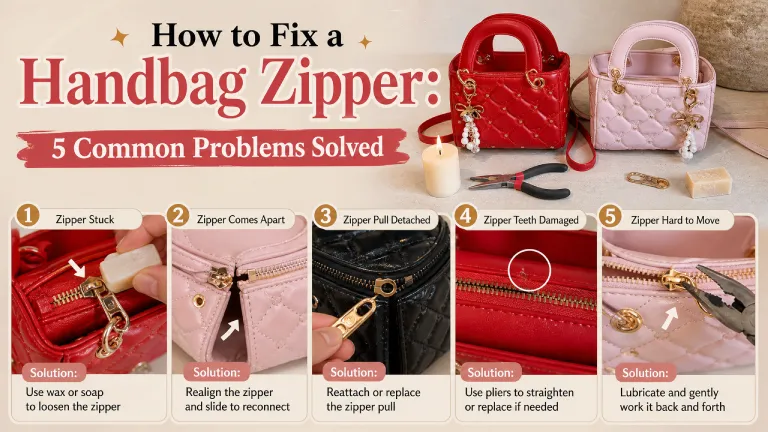
The bag’s opening and closures are critical weak points for water penetration. Standard zippers allow water to seep through the teeth under pressure. Waterproof zippers have special design that prevents water passage. Magnetic snaps and button closures are inherently more waterproof than zippers because they do not have the gaps that zippers do.
See how to recovery the bag zipper for guidance on bags with secure, waterproof closures suitable for wet conditions.
Color Considerations for Waterproof Bags
Dark colors remain your best choice for waterproof bags. Water staining shows more obviously on light colors, and even waterproof bags occasionally allow small amounts of water penetration at seams or closures. Dark colors like black, navy, and dark brown hide any water marks and maintain appearance.
Light-colored waterproof bags work if you are meticulous about drying them immediately after exposure to water. Realistically, dark colors are more practical and forgiving.
Maintaining Waterproof Bags to Preserve Protection
Waterproof treatment degrades over time with use and exposure to sun and weather. To maintain waterproof properties:
Dry completely between uses: After exposure to water or humidity, allow your waterproof bag to air dry completely in a well-ventilated area. Do not store damp.
Reapply protective spray: Once annually or as needed (if water no longer beads on the surface), reapply waterproof protectant spray according to product instructions.
Avoid heat exposure: Extreme heat can damage waterproof coatings. Store away from direct sun and heat sources.
According to Real Simple maintenance guides, regular maintenance of waterproof treatments extends the lifespan of weather-protected bags significantly.
Waterproof Bags for Different Seasons
A winter commuter in a snowy climate benefits enormously from a waterproof bag, as does someone in a rainy climate. Seasonal weather patterns in your specific location determine how essential waterproofing is for your needs.
If you live in a dry climate, water-resistant is probably sufficient. If you commute through weather regularly, waterproof is worth the investment. Consider not just rain but also humidity, sleet, and road salt, which can damage bags even without direct rain exposure.
FAQ
Q: What is the best material for waterproof handbags? A: Treated PU leather or technical synthetics with sealed seams offer excellent waterproofing without the maintenance requirements of conditioned genuine leather.
Q: Can a waterproof bag still have water damage? A: Yes, if seams are not properly sealed or if water gets inside through the opening before you close it. Waterproof is not the same as immune to water damage.
Q: How do I know if a bag is truly waterproof or just water-resistant? A: Check seam construction, look for sealed seams, and read detailed customer reviews about how the bag handles actual rain or water exposure.
Q: Should I treat a waterproof bag with additional protective spray? A: Yes. Most waterproof bags benefit from periodic protective spray reapplication to maintain waterproof properties long-term.
Q: Are waterproof bags heavier than regular bags? A: Not necessarily. Modern waterproof materials are light. Weight depends more on bag design than on waterproof treatment.
Q: What color waterproof bag is best? A: Dark colors hide water stains and are more forgiving. Navy, black, and dark brown are practical choices that maintain appearance despite water exposure.
Q: Do waterproof bags work in heavy downpour? A: Truly waterproof bags with sealed seams and waterproof zippers survive heavy rain. Some light seepage may occur at closures if they are opened in heavy rain, but the interior stays mostly dry.
Q: Can I use a waterproof bag year-round? A: Yes. A waterproof bag works year-round in any climate. Dark-colored waterproof bags are professional enough for office settings and casual enough for weekend use.