
Crossbody Bag Care
PU Leather Care
Everyday Protection
- Adjust the strap to fit snugly: A strap that’s too loose swings while walking or cycling and rubs against belt buckles or buttons, causing surface scuffs. A snug fit reduces this friction.
- Watch the hardware contact points: Buckles and adjusters wear first. When cleaning, avoid letting metal hardware drag directly across the leather panel to prevent scratches or discoloration.
- Be mindful of body contact: Because crossbody bags sit close to the body, they’re more exposed to sweat and rain — a layer of clothing between skin and bag helps on hot days.

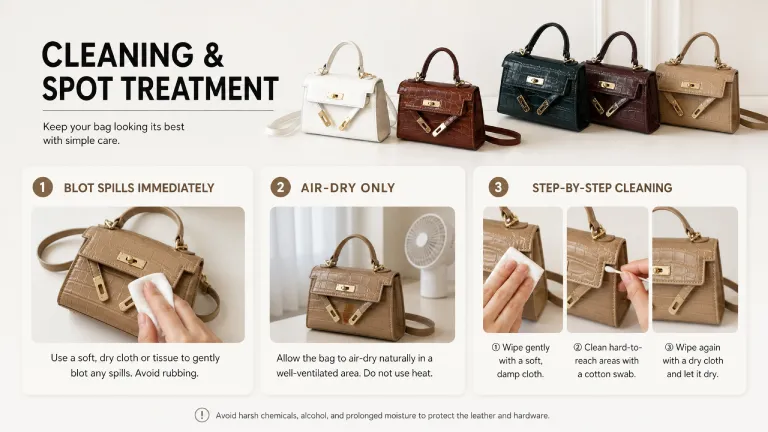
Cleaning & Spot Treatment
- Blot spills immediately: Press (don’t rub) with a dry cloth to absorb liquid before it spreads or seeps into seams (PU leather stain treatment).
- Air-dry only: If the bag gets wet, dry it naturally in a ventilated space. Never use a hairdryer or heater — forced heat warps and cracks PU material.
- Step-by-step cleaning: Dust first with a soft brush or microfiber cloth, then wipe edges, zippers, and seams with a cloth dampened in diluted mild soap (baby wash works well), finishing with a dry cloth to remove residual moisture (step-by-step PU cleaning method).
Storage
- Avoid long-term hanging: Hanging a crossbody bag on a hook for extended periods stretches the strap attachment point. Store it flat or upright instead.
- Keep perfume and lotion away from direct contact: Alcohol and oils in personal care products can discolor or leave a tacky residue on PU surfaces — let products dry fully before putting the bag on.
- Same sun/heat precautions: As with shoulder bags, avoid hot car interiors or damp, enclosed storage spaces.

Canvas / Textile Care (for fabric-paneled styles)
- Don’t overload the strap point: Canvas fibers are sturdy but repeated overloading stretches them, especially where the crossbody strap meets the body of the bag (canvas load and wear tips).
- Check high-friction zones: The crossbody style means more friction against clothing and belts — inspect this area regularly for pilling or thinning fabric.
- Handle odor with baking soda, not perfume: Canvas absorbs sweat odor easily. Sprinkle baking soda on the affected area, let sit for a few hours, then brush off — masking odor with perfume doesn’t address the underlying buildup.
- Dry completely before storing: After any cleaning, make sure the bag is fully dry before putting it away — residual dampness leads to mildew, especially in humid seasons (canvas moisture and mildew prevention).
